





What's Happening?
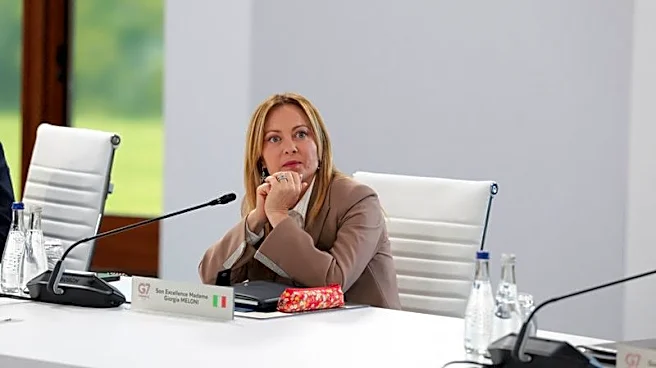
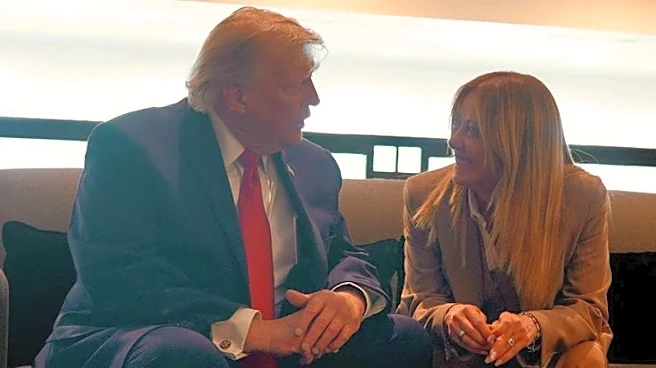
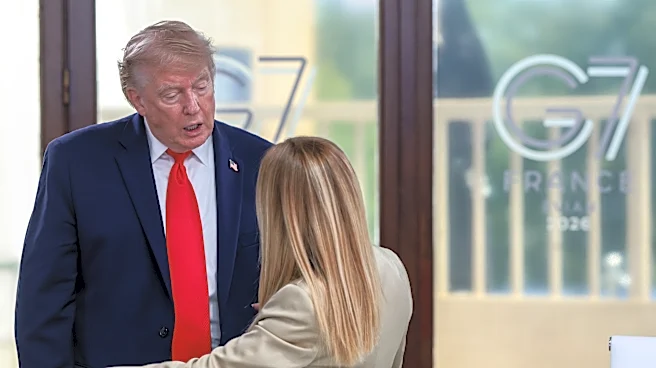
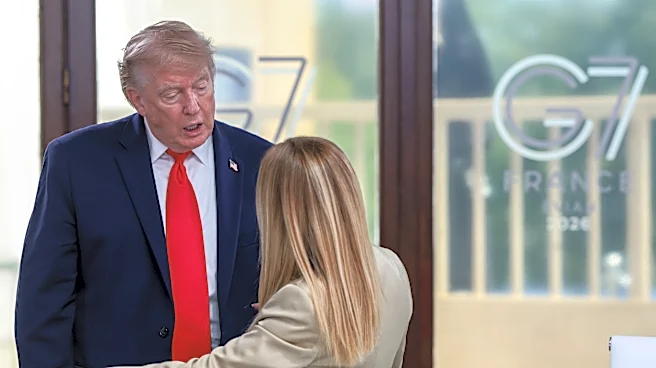
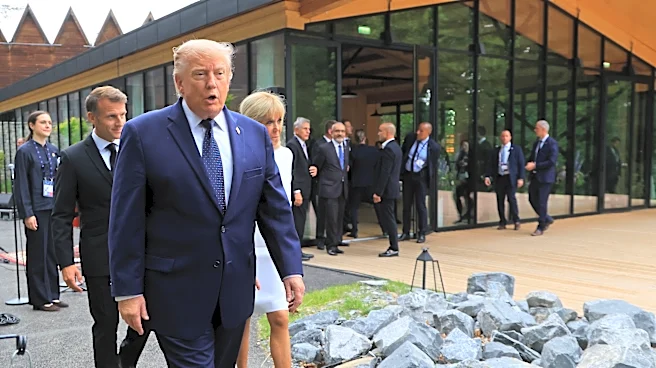
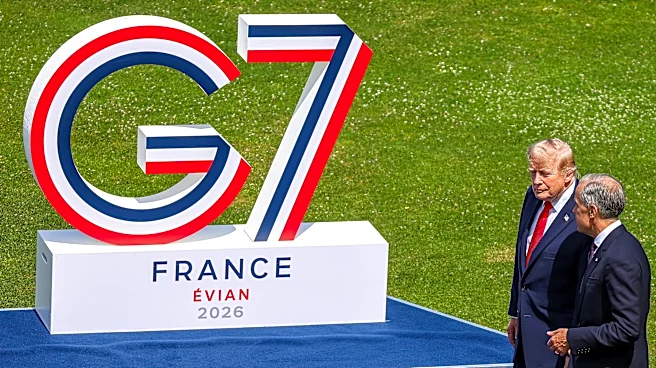
Italian Prime Minister Giorgia Meloni has publicly refuted claims made by U.S. President Donald Trump that she 'begged' for a photo with him during the recent G7 summit in Evian-les-Bains, France. The controversy arose after Trump made these remarks in an interview
with the Italian network La7, where he suggested that Meloni had requested a photo-op with him. In response, Meloni released a video statement categorically denying the claim, describing it as 'completely fabricated' and expressing her astonishment at Trump's behavior towards an ally. The situation escalated as Italian Foreign Minister Antonio Tajani canceled a planned trip to the United States, citing Trump's comments as 'serious and offensive' to both Meloni and Italy. This incident highlights the growing tensions between the U.S. and Italy, particularly in light of disagreements over Trump's foreign policy decisions, including his stance on Iran and tariffs against Europe.
Why It's Important?
This diplomatic spat underscores the fragile nature of international alliances, particularly when personal relationships between leaders are strained. The fallout from Trump's comments could have broader implications for U.S.-Italy relations, potentially affecting diplomatic and economic collaborations. Italy's strong response, including the cancellation of a diplomatic visit, signals a significant rift that could influence European perceptions of U.S. leadership. The incident also reflects the challenges faced by European leaders in balancing domestic political pressures with international diplomatic relations, especially when dealing with a controversial figure like President Trump. As Italy is a key player in the European Union, any deterioration in its relationship with the U.S. could have ripple effects across the continent, impacting collective EU-U.S. strategies on global issues.
What's Next?
The immediate consequence of this incident is the cancellation of the Italian Foreign Minister's visit to the U.S., which was intended to foster business and scientific cooperation. Moving forward, both countries may need to engage in diplomatic efforts to mend the strained relationship. The Italian government has shown solidarity with Meloni, indicating a unified stance against Trump's remarks. This situation may prompt other European leaders to reassess their diplomatic strategies with the U.S., especially if similar incidents occur. Additionally, the White House's response, or lack thereof, to Meloni's remarks could further influence the trajectory of U.S.-Italy relations. Observers will be watching closely to see if this incident leads to a broader reevaluation of alliances and diplomatic protocols within the EU.
Beyond the Headlines
Beyond the immediate diplomatic fallout, this incident highlights the broader issue of how personal dynamics between world leaders can impact international relations. The public nature of the dispute between Trump and Meloni may embolden other leaders to take a firmer stance against perceived slights or inaccuracies in diplomatic interactions. It also raises questions about the role of media in shaping international perceptions and the potential for misinformation to disrupt diplomatic efforts. As global politics become increasingly interconnected, the ability of leaders to navigate personal and political differences will be crucial in maintaining stable international relations.