
What's Happening?
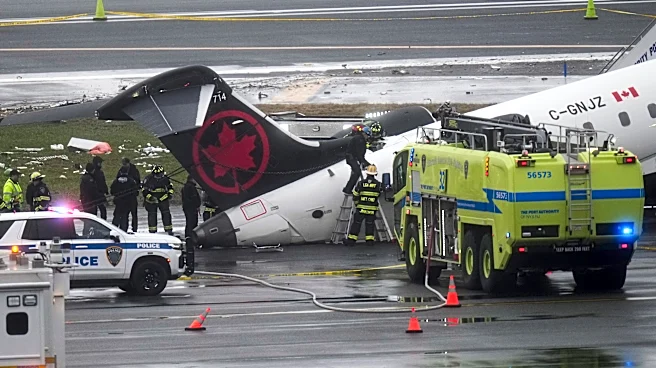
A National Transportation Safety Board (NTSB) report has highlighted a critical communication failure that led to a fatal collision between an Air Canada jet and a fire truck at LaGuardia Airport in New
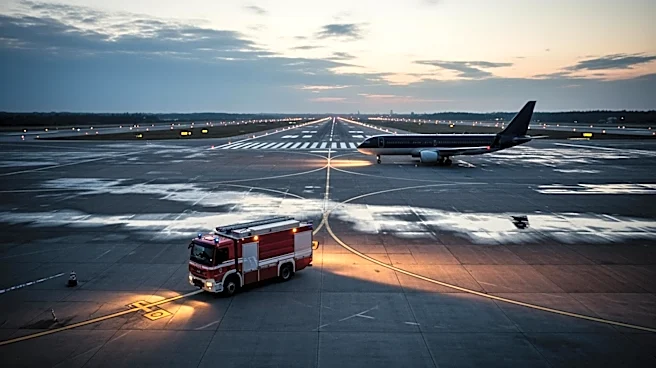
York. The incident, which occurred on March 22, resulted in the deaths of pilots Antoine Forest and Mackenzie Gunther. The report indicates that a firefighter operating the truck heard an air traffic controller's warning to 'stop, stop, stop' but did not realize it was directed at his vehicle. The crash prevention system failed to generate an alert, and runway entrance lights, which serve as stop signals, remained on until just seconds before the collision. The fire truck was part of a convoy responding to an emergency involving a strong odor on a United Airlines jet. The airport's advanced surface surveillance system, ASDE-X, did not function as intended due to the fire truck lacking a transponder and the proximity of other emergency vehicles.
Why It's Important?
This incident underscores significant safety concerns at major U.S. airports, particularly regarding communication and technology systems designed to prevent runway incursions. The failure of the ASDE-X system and the lack of clear communication contributed to the first deadly crash at LaGuardia in 34 years. The event raises questions about the effectiveness of current safety protocols and the need for improvements in technology and training to prevent similar tragedies. The aviation industry, airport authorities, and regulatory bodies may face increased scrutiny and pressure to enhance safety measures, potentially leading to policy changes and technological upgrades.
What's Next?
In response to the NTSB findings, there may be calls for a review of safety systems and protocols at LaGuardia and other major airports. Stakeholders, including the Federal Aviation Administration (FAA) and airport management, might consider implementing more robust communication systems and ensuring all vehicles on the runway are equipped with transponders. Additionally, there could be an emphasis on training air traffic controllers and emergency responders to improve situational awareness and response times. The aviation industry may also explore advancements in technology to enhance runway safety and prevent future incidents.