





What's Happening?
Michael O’Flaherty, the Council of Europe Commissioner for Human Rights, has issued new guidance urging governments to thoroughly assess the human rights implications of externalized migration policies before implementing them. This guidance comes as several
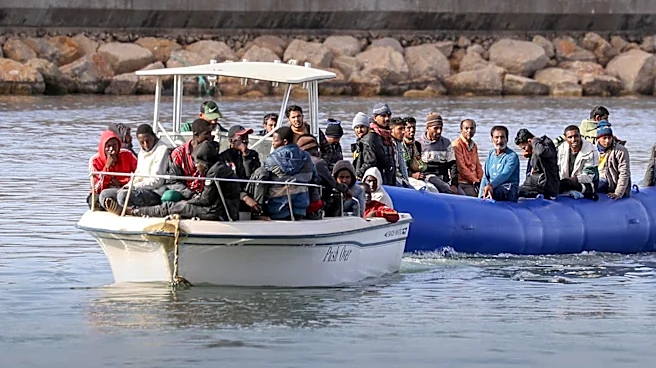
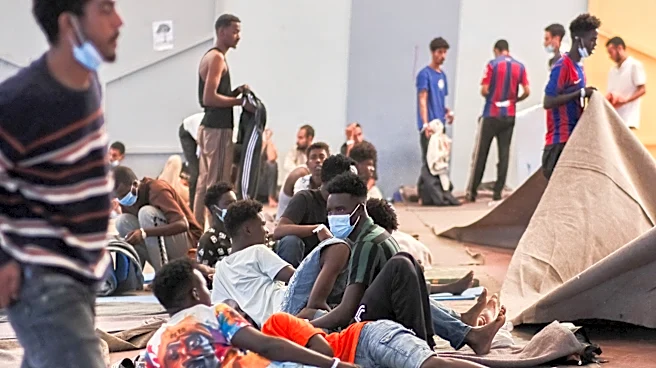
European states are considering shifting asylum or return procedures outside their territories or partnering with non-EU countries to prevent irregular crossings. The Commissioner emphasizes that if states cannot guarantee protection against refoulement, arbitrary detention, ill-treatment, or denial of asylum, they should abandon such plans. The European Commission is also proposing to expand Frontex, the EU’s border agency, into a central returns agency with increased staff and powers, including coordinating returns from one non-EU country to another. This expansion raises concerns among human rights organizations regarding potential impacts on migrants' rights, particularly given reported gaps in monitoring and investigations at EU external borders.
Why It's Important?
This intervention is crucial because it highlights the significant human rights risks associated with the European Union's increasing reliance on externalized migration management. The potential for human rights violations, including refoulement (returning individuals to places where they face persecution), arbitrary detention, and ill-treatment, is a major concern. The expansion of Frontex's powers, particularly its proposed role in coordinating returns between non-EU countries, could lead to a complex web of agreements where accountability and oversight become challenging. If these policies are implemented without robust safeguards, they could undermine international human rights laws and conventions that EU member states are bound by, such as the European Convention on Human Rights. This could also set a precedent for other nations considering similar approaches, potentially eroding global standards for refugee protection and migrant rights. The lack of consistent enforcement and monitoring mechanisms across different member states further exacerbates these risks, creating an environment where vulnerable individuals may not receive adequate protection or access to legal remedies.
What's Next?
The Council of Europe's guidance provides a self-assessment tool for governments to examine six key areas: policy definition, human rights risk assessments, preventive measures and independent monitoring, responses to violations, transparency and democratic scrutiny, and follow-up. States are expected to use this tool to identify risks in advance, implement safeguards, and independently monitor conditions. The European Commission's proposal to expand Frontex will likely undergo further scrutiny and debate, particularly from human rights organizations like Amnesty International and PICUM, which have already warned about the lack of matching safeguards for increased enforcement and deportation powers. The EU Agency for Fundamental Rights (FRA) has also noted persistent gaps in monitoring and investigations at external borders, suggesting that any expansion of Frontex's role would require significant improvements in oversight and accountability. The ongoing discussions will determine whether the EU can balance its migration management objectives with its human rights obligations.
Beyond the Headlines
The debate over externalized migration policies touches upon fundamental ethical and legal questions regarding state sovereignty versus international human rights obligations. The concept of 'return hubs' in third countries, for instance, raises concerns about the EU's responsibility for individuals once they are outside its direct jurisdiction. There's a risk that these policies could create a 'race to the bottom' where countries seek to offload their responsibilities, potentially leading to a weakening of asylum systems globally. Furthermore, the reliance on external partners, especially those with documented human rights issues, could inadvertently legitimize or enable abuses. The long-term implications include a potential shift in the global refugee protection framework, moving away from individual asylum claims towards a more collective, and potentially less protective, approach. This also highlights the tension between security concerns and humanitarian principles, a challenge that will continue to shape international migration policy for years to come.