
What's Happening?
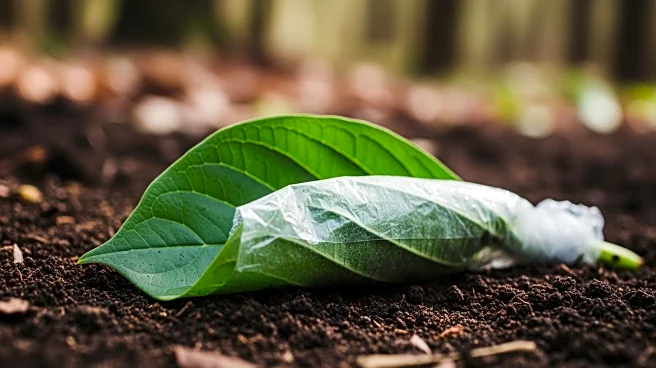
The PerPlacsBio project has been launched by the University of Münster, the University of Applied Forest Sciences Rottenburg, and the nova-Institute to explore the potential of bio-based and biodegradable
plastics in agriculture and forestry. Funded by the Agency for Renewable Resources, the project aims to address the negative impacts of microplastics on ecosystems by providing practical guidance to farmers and foresters. The initiative seeks to identify appropriate applications for biodegradable plastics, build knowledge among users and industry, and support evidence-based decisions in practice, policy, and business. The nova-Institute will focus on expanding the knowledge base regarding alternatives, standards, and political frameworks, while the universities will conduct surveys to understand user needs and barriers to adoption.
Why It's Important?
The launch of PerPlacsBio is significant as it addresses the growing concern over plastic pollution, particularly in agriculture and forestry. By focusing on biodegradable plastics, the project aims to reduce environmental pollution and promote sustainable practices. This initiative could lead to a shift in how plastics are used in these sectors, potentially influencing policy and industry standards. The project's outcomes may benefit farmers and foresters by providing them with viable alternatives to traditional plastics, thus reducing their environmental footprint. Additionally, the project could set a precedent for similar initiatives globally, encouraging the adoption of biodegradable materials in various industries.
What's Next?
The PerPlacsBio project will involve several workshops organized by the nova-Institute to present findings and gather feedback from stakeholders in industry, academia, and policy. These discussions will focus on the feasibility of alternative materials and measures, integrating practical experience into the project work. The project team is also seeking external expert input to strengthen the evidence base and ensure practical relevance. As the project progresses, it is expected to produce publicly available results that will inform decision-makers in industry and politics, potentially leading to policy changes and new industry standards for biodegradable plastics.