




What's Happening?
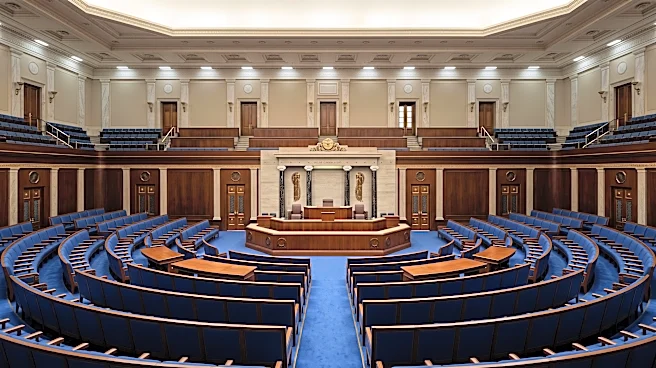
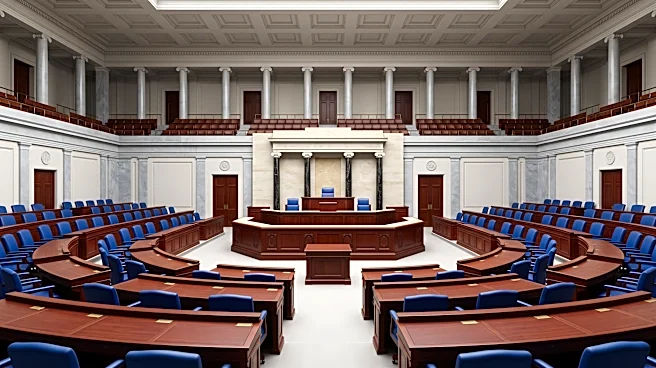
The U.S. House of Representatives has passed legislation aimed at penalizing universities that participate in commercial boycotts of Israel. The bill, which passed with a vote of 237-169, saw significant opposition from Democrats, including House Minority
Leader Hakeem Jeffries and other top party leaders. Only 33 Democrats joined nearly all Republicans in supporting the measure, while 167 Democrats voted against it. The legislation, led by House Rules Committee Chairwoman Virginia Foxx (R-N.C.) and co-led by Rep. Josh Gottheimer (D-N.J.), seeks to amend the Higher Education Act of 1965. It would prohibit institutions engaged in a 'nonexpressive commercial boycott of Israel' from receiving certain federal education funding. Additionally, universities receiving federal international education funds would be required to certify that students and faculty are not unreasonably prevented from participating in academic programs in Israel, ensuring equal terms as programs in other countries. Supporters argue the bill is a necessary response to the anti-Israel BDS movement and the hostile environment faced by Jewish students on college campuses, with Foxx stating that university BDS policies contribute to marginalizing Jewish students.
Why It's Important?
This legislation highlights a significant divide within the Democratic Party regarding the approach to combating anti-Israel boycotts and addressing antisemitism on college campuses. The bill's passage underscores the ongoing debate about free speech versus combating discrimination, particularly in an academic setting. For universities, the potential loss of federal funding could have substantial financial implications, forcing them to re-evaluate their policies concerning the BDS movement. This could lead to increased scrutiny of university affiliations and activities that might be perceived as supporting boycotts against Israel. The measure is seen by its proponents as a critical step in protecting Jewish students and ensuring their access to educational opportunities without discrimination. Conversely, opponents argue that the bill could infringe upon constitutionally protected speech and academic freedom, potentially setting a precedent for government intervention in university policies based on political stances. The outcome could influence the landscape of higher education funding and the autonomy of academic institutions in the U.S.
What's Next?
The bill will now move to the Senate for consideration, where its fate remains uncertain given the strong Democratic opposition in the House. If it passes the Senate, it would then go to the President for signature. Should it become law, universities would need to review and potentially revise their policies to comply with the new federal funding requirements, particularly concerning any institutional involvement in commercial boycotts of Israel. This could lead to legal challenges from civil liberties groups and academic organizations arguing against the perceived infringement on free speech and academic freedom. Furthermore, the debate surrounding this legislation is likely to intensify, influencing future discussions on campus activism, antisemitism, and the role of federal funding in shaping university policies. Stakeholders, including student groups, university administrations, and advocacy organizations, will likely continue to voice their perspectives, potentially leading to further protests or policy adjustments at the institutional level.
Beyond the Headlines
The legislation touches upon deeper implications concerning the balance between protecting minority groups from discrimination and upholding principles of free speech and academic freedom. Critics argue that while the intent to combat antisemitism is valid, the method of conditioning federal funding could inadvertently stifle legitimate criticism or political expression on campuses. This raises questions about the extent to which the government should regulate the political activities of educational institutions. The bill also reflects a broader trend of increasing legislative action aimed at addressing the BDS movement, which some view as a form of economic warfare against Israel. The long-term impact could be a chilling effect on campus activism related to international conflicts, as universities become more cautious about actions that could jeopardize federal funding. This could reshape the nature of political discourse and advocacy within academic environments, potentially leading to a more homogenized approach to sensitive geopolitical issues.