






What's Happening?
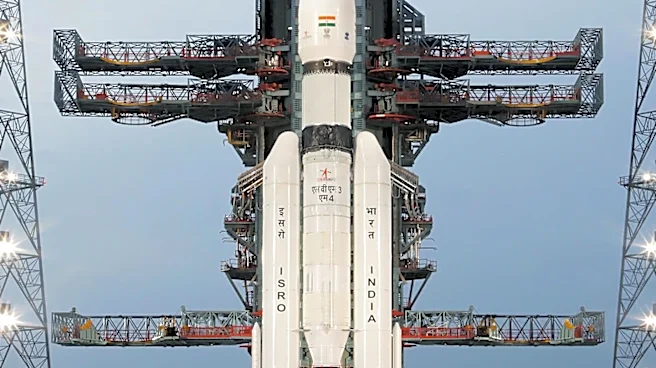
The Indian Space Research Organisation (ISRO) has successfully conducted a flight acceptance test of a cryogenic rocket engine. This engine is designated for the upcoming Geosynchronous Satellite Launch Vehicle (GSLV) mission, GSLV-F19, which will carry
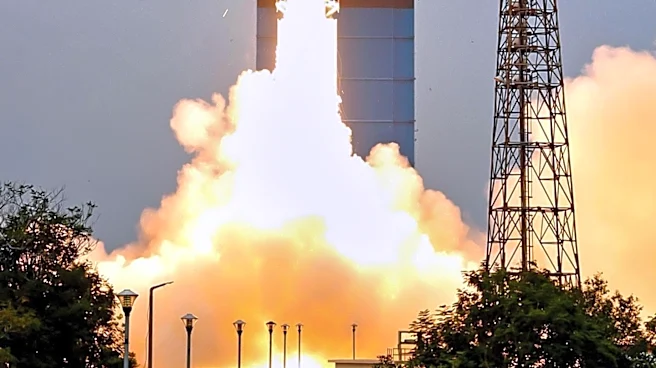
the NVS-04 navigation satellite into orbit. The test, which lasted 200 seconds, took place on November 5, 2026, at the ISRO Propulsion Complex (IPRC) in Mahendragiri, Tamil Nadu. ISRO confirmed that the engine's performance, including the ignition of both the Main Engine (ME) and the Gas Generator (GG), was satisfactory and consistent with pre-test predictions. This successful test is a crucial step towards the launch of India's next-generation navigation satellite, NVS-04, which is part of the Navigation with Indian Constellation (NavIC) system. NavIC is India's independent regional satellite navigation system, designed to provide positioning, navigation, and timing services across India and an extended region of approximately 1,500 km beyond its borders. The NVS series aims to enhance India's indigenous navigation capabilities.
Why It's Important?
The successful test-firing of the cryogenic engine is a significant milestone for India's space program, particularly for its strategic navigation infrastructure. Cryogenic engines are highly complex components essential for launching heavy payloads into higher orbits, such as geostationary transfer orbits. By successfully qualifying this engine, ISRO ensures the reliability and capability of its GSLV rockets to deploy advanced satellites. The NVS-04 satellite, once launched, will strengthen India's NavIC system, reducing the country's reliance on foreign satellite navigation systems like GPS. This independence is crucial for national security, defense applications, and various civilian services, including transportation, disaster management, and mapping. The development and deployment of indigenous navigation systems like NavIC underscore India's growing self-reliance and technological prowess in space, positioning it as a key player in the global space arena. This advancement also has implications for regional stability and technological leadership.
What's Next?
Following the successful flight acceptance test, the cryogenic engine will be integrated into the cryogenic stage of the GSLV-F19 launch vehicle. This integration marks the next phase in preparing for the NVS-04 mission. The launch of NVS-04 is anticipated to further enhance the NavIC system, providing more robust and accurate navigation services. Future steps will involve comprehensive checks and final preparations of the GSLV-F19 rocket and its payload before the actual launch. The successful deployment of NVS-04 will contribute to the ongoing modernization and expansion of India's satellite navigation constellation. This will likely be followed by further advancements in the NavIC system, potentially including more satellites and enhanced services, as India continues to invest in its space capabilities to meet strategic and civilian needs.