






What's Happening?
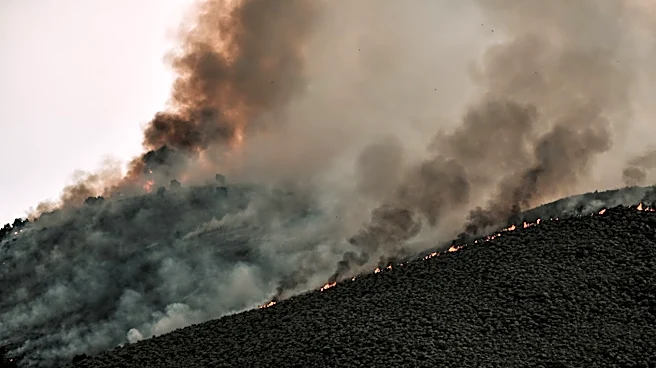
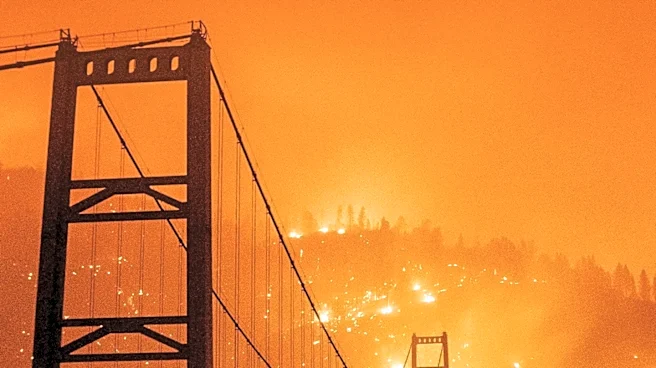
A recent study published in the journal Geophysical Research Letters highlights that a significant portion of smoke from Canadian wildfires originates from underground carbon stores rather than surface vegetation. The research, led by Alemu Gonsamo from McMaster
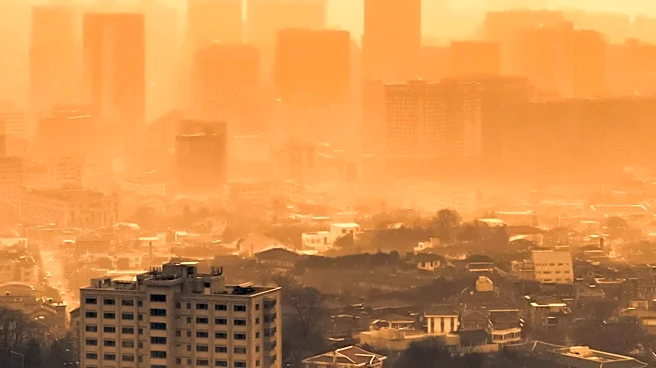
University, indicates that about three-quarters of emissions from these wildfires come from carbon stored in the soil. This finding is based on data from Canada's record fire season in 2023, which saw extensive fires across the country, including in Quebec, Alberta, and British Columbia. The study emphasizes that the smoke affecting U.S. cities like New York and Washington is largely due to these underground emissions, challenging the perception that forestry management practices are to blame.
Why It's Important?
The study's findings have significant implications for understanding and managing wildfire smoke pollution in North America. As wildfires become more frequent and intense due to climate change, the role of underground carbon emissions in smoke production is crucial. This challenges current strategies focused on surface vegetation management and highlights the need for new approaches to mitigate smoke impacts on air quality. The research also underscores the global environmental impact, as the carbon released from these fires is comparable to the fossil-fuel emissions of a large country. This has potential policy implications for both Canada and the U.S., as they address cross-border air quality issues.
What's Next?
The study suggests that as climate change continues to drive extreme weather conditions, the frequency and intensity of wildfires, and consequently smoke events, are likely to increase. This calls for enhanced international cooperation and policy adjustments to address the transboundary nature of wildfire smoke. Researchers and policymakers may need to focus on soil carbon management and explore innovative solutions to reduce emissions from underground sources. Additionally, public awareness campaigns could help shift perceptions about the causes of wildfire smoke, fostering support for comprehensive fire management strategies.