








What's Happening?
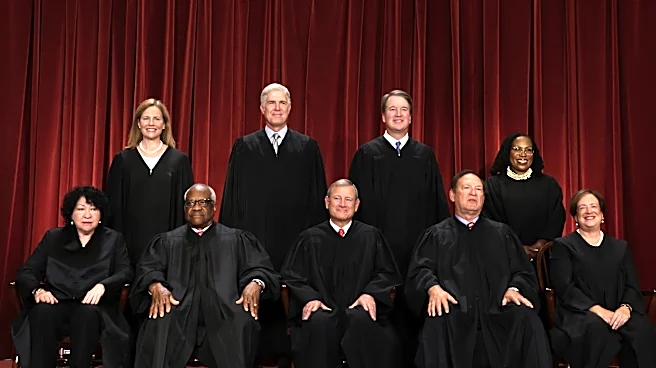
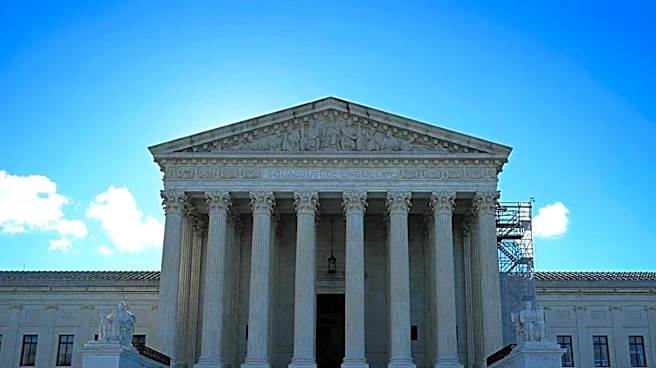
Justice Sonia Sotomayor has expressed dissent in a recent Supreme Court ruling that upheld state laws prohibiting transgender women from participating in female sports teams. The decision, which was supported by a 6-3 majority, reflects a broader national
trend since 2020, where legal and political landscapes have increasingly restricted transgender rights. The ruling overturned lower court decisions that had previously favored transgender interests, emphasizing concerns about safety and fair competition. Justice Sotomayor, joined by Justices Elena Kagan and Ketanji Brown Jackson, argued that such prohibitions deny transgender women the positive experiences and opportunities that sports provide, such as resilience and tenacity. The case involved Lindsay Hecox, a Boise State University senior, and Becky Pepper-Jackson, a middle school student in West Virginia, both seeking to participate in sports teams aligning with their gender identity.
Why It's Important?
The Supreme Court's decision is significant as it underscores the ongoing legal and societal debates surrounding transgender rights in the United States. The ruling may have far-reaching implications for transgender individuals, particularly in the realm of sports, where participation is increasingly being legislated based on biological sex. This decision could influence future policies and legal battles, as it sets a precedent for how transgender rights are interpreted in relation to Title IX and the Constitution's equality guarantee. The ruling also highlights the division within the Supreme Court and reflects broader societal attitudes, as evidenced by recent surveys showing increasing public support for restrictions on transgender participation in sports. This development could impact the lives of transgender individuals, potentially limiting their access to opportunities and experiences that are integral to personal and social development.
What's Next?
Following the Supreme Court's decision, there may be further legal challenges and legislative actions at both state and federal levels. The Department of Justice has already initiated lawsuits against states that allow transgender students to participate in sports teams of their choice, indicating ongoing legal battles. Additionally, advocacy groups and civil rights organizations may continue to push for policies that support transgender rights, potentially leading to new legal interpretations and protections. The ruling may also prompt states to reevaluate their own laws regarding transgender participation in sports, potentially leading to a patchwork of regulations across the country. As public opinion continues to evolve, future court cases and legislative efforts will likely shape the landscape of transgender rights in the U.S.