





What's Happening?
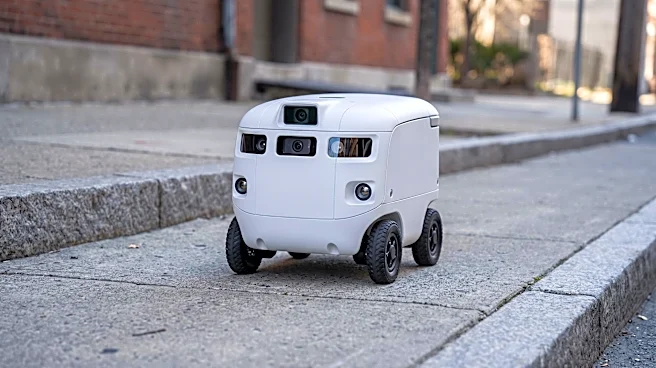
Carolyn Marvin, a 78-year-old retired University of Pennsylvania communications professor, was arrested in Philadelphia for repeatedly blocking an autonomous delivery robot. This incident occurred on October 14, marking the first time her ongoing protest
against these robots led to an arrest. Marvin has made it a habit to stand in front of these robots, delaying their deliveries for several minutes, as a symbolic act of protest. She views her actions as a stand against the displacement of low-income delivery workers, the physical hazards robots pose on sidewalks, and privacy concerns due to their embedded cameras. Marvin also asserts her First Amendment right to protest corporate abuses in public spaces. Philadelphia police confirmed they responded to a report of 'criminal mischief involving a delivery robot' and arrested Marvin after she refused multiple commands to move. In 2020, Pennsylvania passed a law classifying these 'personal delivery devices' as pedestrians, granting them certain rights on sidewalks and crosswalks, though they are still required to yield to human pedestrians.
Why It's Important?
This incident highlights growing tensions surrounding the integration of autonomous delivery robots into urban environments and raises significant questions about public space, individual rights, and the legal status of AI-powered machines. Marvin's protest underscores concerns about job displacement in the gig economy, particularly for low-income workers, as automation expands. The physical presence of these robots on sidewalks also sparks debate about pedestrian safety and accessibility, especially for vulnerable populations. Furthermore, the legal framework that grants robots pedestrian status, as seen in Pennsylvania, creates a complex legal landscape where the rights of machines intersect with those of citizens. This case could influence public discourse and policy decisions regarding the regulation and deployment of autonomous technologies in public areas, potentially leading to more defined guidelines for their operation and the rights of individuals to protest their presence.
What's Next?
Following her arrest, Carolyn Marvin has stated her intention to continue blocking delivery robots, though she will now be more mindful of police presence. This suggests a potential for further confrontations and arrests, which could escalate the public debate surrounding autonomous delivery services. The legal implications of her disorderly conduct citation remain to be seen, and any court proceedings could further clarify the legal standing of individuals protesting against robots in public spaces. This situation may also prompt delivery companies like Uber Eats to re-evaluate their operational strategies and community engagement in cities where their robots are deployed. Additionally, the incident could spur renewed legislative discussions at local and state levels regarding the regulation of personal delivery devices, potentially leading to amendments to existing laws or the introduction of new ordinances that address public concerns about safety, employment, and the use of public infrastructure by autonomous machines.
Beyond the Headlines
The arrest of Carolyn Marvin transcends a simple case of disorderly conduct, touching upon deeper societal implications of technological advancement and the evolving definition of public space. Her protest embodies a broader resistance against the perceived encroachment of technology into daily life, symbolizing a pushback against the less tangible influences of AI and social media algorithms. By targeting a visible manifestation of this technological shift—the delivery robot—Marvin makes the issue tangible and accessible for public discourse. This incident also brings to the forefront ethical considerations about the rights and responsibilities of autonomous entities in shared human environments. It challenges the notion of who or what has priority in public spaces and forces a re-evaluation of how society balances technological progress with human values, community well-being, and individual freedoms. The ongoing debate will likely shape future urban planning, technological development, and legal frameworks concerning human-robot interactions.