
What's Happening?
For the fifth consecutive day, limitations with the Starshield system are preventing Ukraine from intercepting unmanned aerial vehicles (UAVs) at the front line, according to Denis Senik, Charge d'affaires
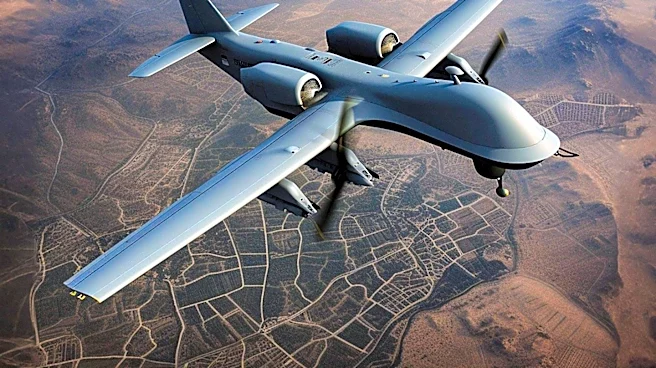
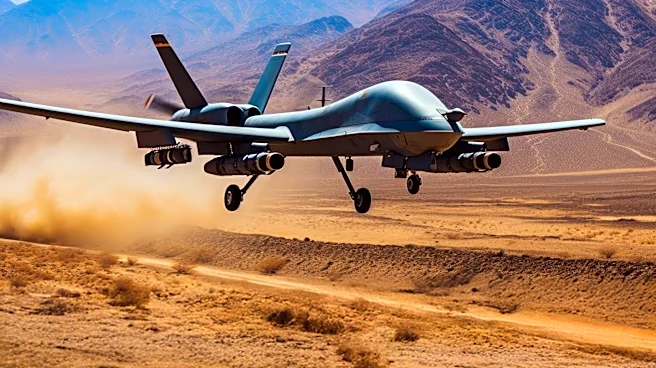
of Ukraine in the United States. Ukrainian specialists are conducting daily checks on Starshield's operation across various sites, consistently yielding the same results: Russian jet drones can only be intercepted after they have crossed into Ukrainian-controlled territory. Senik previously stated that the Starshield system deactivates when drones achieve speeds exceeding 100 miles per hour (approximately 160 km/h). This operational constraint grants Russian forces an additional advantage they previously lacked, as their drones can freely traverse the front line without immediate interception.
Why It's Important?
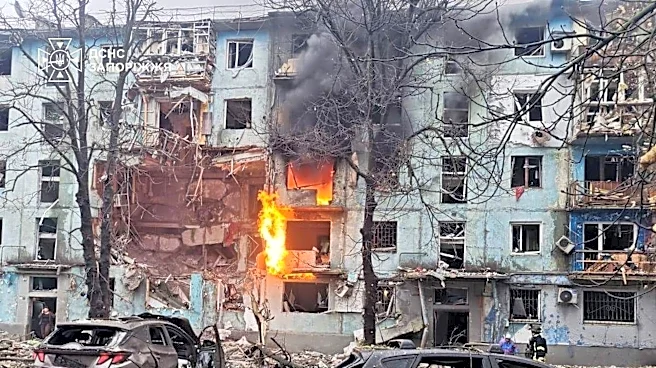
The ongoing limitations of the Starshield system significantly impact Ukraine's defensive capabilities, particularly at the front line. The inability to intercept Russian drones before they cross into Ukrainian-controlled territory means that critical early warning and defensive measures are compromised. This gives Russian forces a tactical advantage, allowing them to conduct reconnaissance, target identification, and attack missions with reduced risk of immediate interception. For Ukraine, this could lead to increased damage to infrastructure, military assets, and civilian casualties, as defensive responses are delayed. The issue also highlights potential vulnerabilities in advanced technological defense systems when confronted with high-speed threats, raising questions about the adaptability and resilience of such technologies in dynamic conflict zones. The situation could also influence future military aid discussions, emphasizing the need for more robust and adaptable counter-drone technologies.
What's Next?
Ukrainian authorities will likely continue to address the Starshield system's limitations, potentially seeking technical solutions or alternative defense mechanisms to counter high-speed drones at the front line. Discussions with the system's providers may occur to resolve the speed-related deactivation issue. Ukraine might also explore integrating other air defense systems or developing new tactics to compensate for Starshield's current shortcomings. This situation could prompt a re-evaluation of current drone defense strategies and investments in more diverse and resilient counter-UAV technologies. Furthermore, the ongoing challenge may influence international partners to provide additional or different types of air defense assistance to Ukraine, focusing on systems capable of engaging faster aerial threats closer to the front lines.
Beyond the Headlines
The Starshield limitations reveal a broader challenge in modern warfare: the rapid evolution of offensive capabilities often outpaces defensive technologies. This scenario underscores the continuous arms race between drone development and counter-drone systems. It also highlights the complex interplay between commercial technology and military application, where systems designed for one purpose may encounter unforeseen vulnerabilities in a combat environment. The reliance on advanced technology for defense also brings into focus issues of technical support, software updates, and the need for systems to be robust against diverse and evolving threats. This situation could also spark discussions about the ethical implications of technological limitations in protecting civilian populations and critical infrastructure during conflict.