




What's Happening?
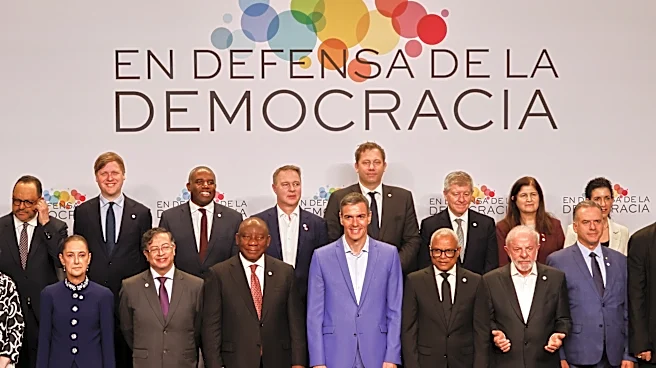
The European Union (EU) convened a peace conference in Brussels, attended by representatives from over 60 nations, to discuss stability and long-term peace in Israel, the West Bank, and Gaza. The EU, a major aid provider to Palestinians and a key trading
partner with Israel, has been sidelined in recent Middle Eastern negotiations, including the October ceasefire in Gaza. The conference aims to renew EU influence in the region, especially following the election defeat of Viktor Orban in Hungary, a strong ally of Israeli Prime Minister Benjamin Netanyahu. The EU supports a two-state solution, although ongoing violence in the West Bank and Gaza complicates this goal. Palestinian Prime Minister Mohamed Mustafa emphasized the need for unified governance and security in Gaza, calling for the disarmament of armed groups and Israeli withdrawal.
Why It's Important?
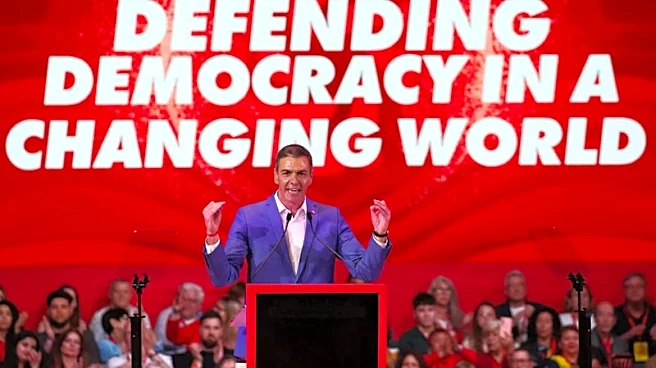
The EU's efforts to re-engage in Middle Eastern diplomacy highlight its desire to play a more active role in regional peace processes. As the largest donor to the Palestinian Authority, the EU's involvement is crucial for financial and political support. The conference reflects a shift in EU dynamics, with leaders like Spain's Prime Minister Pedro Sánchez advocating for stronger actions against Israel's military policies. This could lead to changes in EU-Israel relations, potentially affecting trade agreements and diplomatic ties. The EU's stance may influence other international actors and shape future peace negotiations.
What's Next?
The EU is considering various measures to increase pressure on Israel, including potential sanctions on Israeli settlers in the West Bank. Spain plans to propose ending the EU's Association Agreement with Israel, though this requires unanimous approval, which is unlikely due to support for Israel from countries like Austria and Germany. The EU may pursue alternative actions if a qualified majority agrees. Hungary's new Prime Minister, Peter Magyar, may alter Hungary's previous policies, potentially affecting EU consensus on Israel. The outcome of these discussions could redefine the EU's role in Middle Eastern diplomacy.