


What's Happening?
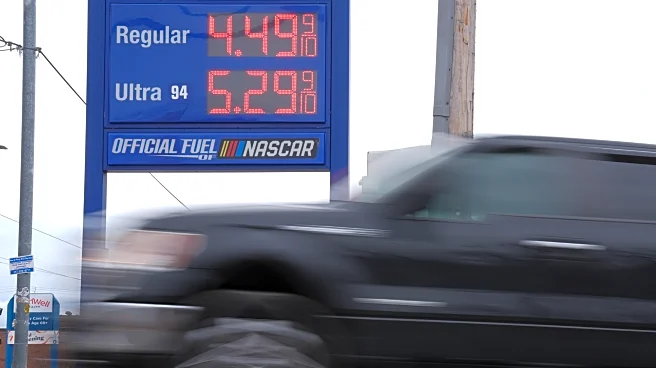
Gas prices in the United States have risen above $4 per gallon for the first time in over three years, driven by the ongoing conflict in Iran that has disrupted global oil supplies. According to GasBuddy, the national average price for regular gasoline
reached $4.015 per gallon, marking a significant increase from the previous month. The highest prices are reported in California, while Oklahoma has the lowest. This surge in gas prices comes after the Trump administration previously claimed to have achieved significant reductions in fuel costs. Concurrently, President Trump's approval rating has dropped, with 59% of voters expressing disapproval in recent polls, a notable increase from the previous year.
Why It's Important?
The rise in gas prices has significant economic implications for American consumers, potentially increasing the cost of living and affecting disposable income. The situation highlights the vulnerability of global oil markets to geopolitical tensions, particularly in the Middle East. The decline in President Trump's approval rating amid these economic challenges could impact his political standing and influence future policy decisions. The increased fuel costs may also prompt discussions on energy independence and the need for alternative energy sources to mitigate reliance on volatile international markets.
What's Next?
As the situation in Iran continues to evolve, further fluctuations in gas prices are possible, which could lead to increased pressure on the administration to address energy policy and economic stability. Political leaders and stakeholders may push for measures to stabilize fuel prices and explore long-term solutions to reduce dependency on foreign oil. The administration's response to these challenges will be closely watched, as it could influence public opinion and voter sentiment in upcoming elections.