





What's Happening?
The government of South Sudan is moving forward with plans to construct a 94-kilometer flood-protection dyke between Bor South and Twic East counties in Jonglei State. This initiative aims to shield communities from recurring floods while ensuring continued
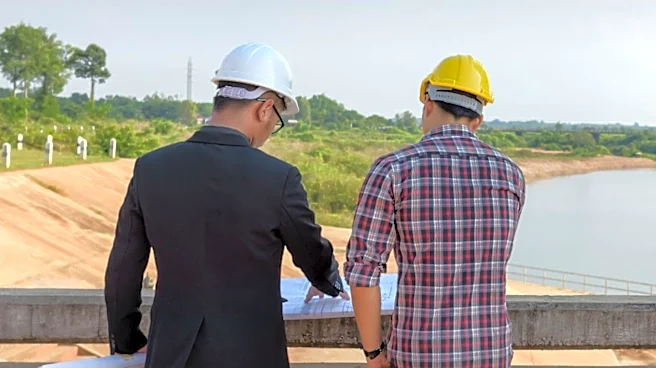
access to water and safeguarding local livelihoods. Undersecretary in the Ministry of Water Resources and Irrigation, Sultan Lam Tungwar Kueigwong, emphasized that the dyke is designed to be environmentally and animal-friendly, incorporating multiple culverts and dedicated wildlife crossings. Jonglei's location within the Sudd, a vast, low-lying floodplain, makes it particularly susceptible to inundation, with even minor increases in river levels leading to widespread flooding. Lam stated that this is not a temporary issue but a permanent shift in the baseline, requiring calibrated engineering solutions. The United Nations reports that floods have impacted an estimated 1,024,500 people across 29 counties in six states in South Sudan, displacing nearly 355,000 individuals, with Jonglei and Unity states accounting for almost 87% of those affected. The delegation recently inspected a rehabilitated dyke section at Payueny in Malou Block and drainage channel works in Bor town.
Why It's Important?
This flood protection project is crucial for the stability and well-being of hundreds of thousands of people in South Sudan, particularly in Jonglei State, which has been severely impacted by recurrent flooding. The displacement of nearly 355,000 people underscores the urgent need for infrastructure that can mitigate the effects of climate change and environmental shifts. By protecting communities, the dyke aims to prevent further displacement, preserve agricultural land, and maintain access to vital water resources, which are essential for livelihoods in the region. The environmental and animal-friendly design also highlights a commitment to sustainable development, recognizing the delicate ecological balance of the Sudd. Without such interventions, the ongoing flooding could exacerbate humanitarian crises, strain limited resources, and hinder long-term development efforts in one of the world's most vulnerable regions. The project's success could serve as a model for other flood-prone areas facing similar challenges due to climate change.
What's Next?
The South Sudanese government will proceed with the construction of the 94-kilometer flood-protection dyke. This will involve continued engineering and environmental assessments to ensure the project's long-term viability and minimal ecological impact. The Ministry of Water Resources and Irrigation will likely oversee the implementation, potentially seeking international support and funding given the scale of the project and the ongoing humanitarian challenges in the region. Monitoring the effectiveness of the dyke in protecting communities and preserving livelihoods will be critical. Furthermore, the project's progress will be watched by international organizations like the United Nations, which has highlighted the severe impact of flooding in South Sudan. The success of this initiative could influence future infrastructure development strategies in other flood-prone areas within East Africa, where severe flooding is projected to displace millions more people by the end of the year.
Beyond the Headlines
The planned dyke in Jonglei State represents more than just a physical barrier against water; it symbolizes a critical adaptation strategy in the face of escalating climate change impacts. The emphasis on an 'environmentally and animal-friendly' design reflects a growing awareness of the need for integrated solutions that consider both human and ecological well-being. This project could set a precedent for how developing nations approach large-scale infrastructure in sensitive ecosystems, balancing protection with preservation. The long-term implications extend to regional stability, as climate-induced displacement often exacerbates existing social and economic tensions. By securing communities, the dyke could contribute to reducing internal migration pressures and fostering greater resilience. However, the challenge lies not only in construction but also in ongoing maintenance, resource management, and ensuring equitable access to protected areas, which will require sustained political will and community engagement.