



What's Happening?
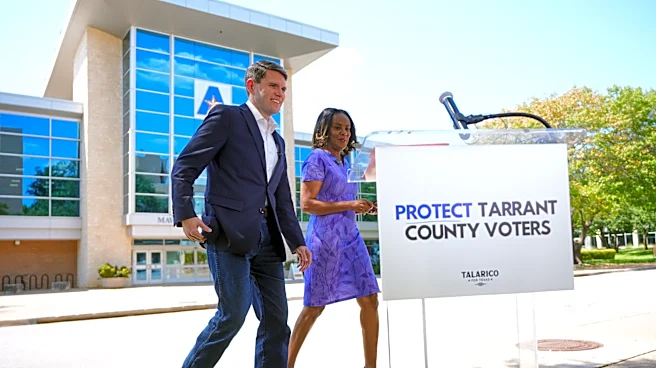
Texas Democratic Senate hopeful James Talarico is facing scrutiny over past comments made during a September 2020 Zoom call with Sierra Club activists. In the forum, Talarico described capitalism as an 'oppressive system' that, along with white supremacy
and climate change, needed to be dismantled. He also expressed skepticism about the long-term viability of Texas's fossil fuel industry, despite the state being a major producer of crude oil. At the time, Talarico was running for his second term in the Texas state legislature. His spokesperson, JT Ennis, has stated that Talarico is a 'proud capitalist' and acknowledges that he 'missed the mark on some of his past statements.' Ennis also highlighted Talarico's votes in favor of the oil industry and his current stance on an 'all of the above' energy strategy that supports Texas oil and gas jobs. Republicans have used these past comments to attack Talarico, while his campaign has countered by pointing to Republican candidate Ken Paxton's own controversies.
Why It's Important?
These resurfaced comments are significant for the U.S. political landscape, particularly in Texas, a state with a strong energy industry and a generally conservative electorate. Talarico's past remarks could alienate moderate and conservative voters, potentially impacting his Senate campaign. The debate over capitalism and the future of the fossil fuel industry is a central theme in U.S. politics, and Talarico's nuanced position—criticizing capitalism while supporting the oil industry in practice—highlights the complexities faced by Democratic candidates in energy-producing states. For the U.S. energy sector, such statements from a political candidate, even if later walked back, can create uncertainty and fuel political opposition to environmental regulations. The controversy also underscores the challenges of political messaging and the lasting impact of past statements in the age of digital records. The outcome of this Senate race could influence the balance of power in the U.S. Senate and the national conversation around economic systems and climate policy.
What's Next?
As the Senate campaign progresses, Talarico will likely continue to face questions about his past comments on capitalism and the fossil fuel industry. His campaign will need to effectively communicate his current positions and demonstrate his commitment to Texas's economic interests, including the energy sector. Republicans will undoubtedly continue to use these remarks to paint him as out of touch with mainstream Texan values. The debate will likely intensify, with both sides attempting to define Talarico's stance on economic and environmental issues. The election's outcome will serve as a barometer for how voters in a key energy state respond to candidates who have expressed critical views on foundational economic systems. This situation could also prompt other candidates to be more cautious about their public statements, particularly those made in less formal settings, as they can be weaponized in future campaigns. The broader implications include continued national discussions on the role of capitalism, climate change, and energy policy in the U.S.
Beyond the Headlines
The controversy surrounding James Talarico's past comments delves into deeper ideological tensions within the U.S. political discourse. His initial linking of capitalism, white supremacy, and climate change reflects a perspective prevalent among some progressive activists, suggesting a systemic critique of societal structures. The subsequent clarification by his campaign, emphasizing his 'proud capitalist' stance and support for the oil industry, highlights the pragmatic compromises often required in mainstream politics, especially in a state like Texas. This dynamic raises questions about the authenticity of political positions and the pressure on candidates to adapt their rhetoric to appeal to a broader electorate. Ethically, it prompts a discussion on whether politicians should be held accountable for past statements that may not align with their current platforms, and how much evolution in thought is acceptable. Culturally, it reflects the ongoing struggle to reconcile economic growth with environmental concerns and social justice, particularly in regions heavily reliant on traditional industries. The long-term shift could see a continued polarization of these debates, or conversely, a push for more nuanced and integrated policy solutions that address both economic prosperity and environmental sustainability.