







What's Happening?
Researchers from Poznań University of Medical Sciences in Poland are advocating for the inclusion of plant-based diets within the international One Health framework. Their arguments, presented in Frontiers in Environmental Science, suggest that reducing
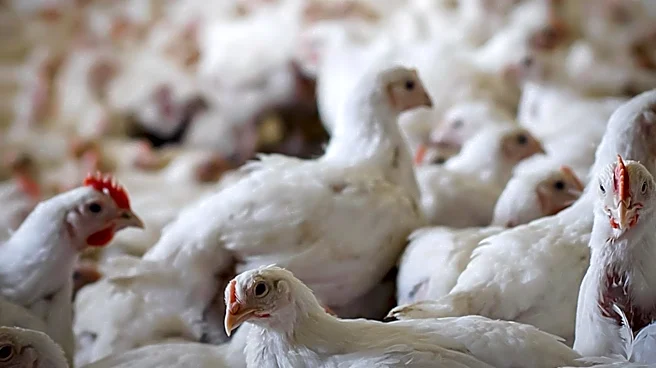
animal product consumption can simultaneously improve human health, animal welfare, and environmental sustainability. The One Health concept, developed by organizations like the World Health Organization (WHO) and the Food and Agriculture Organization of the United Nations (FAO), links human health to animal health and the environment. The Polish scientists argue that while the framework has focused on zoonotic diseases and antimicrobial resistance, it has largely overlooked the role of food production. They highlight that industrial farming practices contribute to chronic stress in animals, increased risk of infections, and significant antibiotic use, with approximately 75% of human infectious diseases in recent decades being of zoonotic origin. Furthermore, animal production accounts for nearly three-quarters of global antibiotic use, contributing to antibiotic resistance.
Why It's Important?
This research underscores the interconnectedness of diet, public health, and environmental impact, offering a comprehensive perspective that could influence U.S. dietary guidelines and food policy. The emphasis on reducing animal product consumption aligns with growing concerns in the U.S. regarding sustainable food systems and the health implications of current dietary patterns. If adopted, such a framework could lead to policy changes supporting plant-based food production, potentially impacting the U.S. agricultural sector by shifting demand from livestock to high-protein crops. It also highlights the economic and health burdens associated with antibiotic resistance and zoonotic diseases, which are significant issues in the U.S. healthcare system. The call for policy changes, rather than solely consumer responsibility, could prompt U.S. government agencies to re-evaluate their roles in promoting healthier and more sustainable food choices, potentially leading to investments in new protein sources and technologies, including cell-cultured meat.
What's Next?
The Polish scientists suggest that changes are needed in official dietary guidelines and institutional catering, alongside education, support for farmers growing high-protein crops, and investment in new protein sources and technologies, including cell-cultured meat. While these changes do not need to be identical in every country, the U.S. could consider these recommendations in its ongoing efforts to address public health and environmental challenges. The research emphasizes that food policy effectively becomes health policy, suggesting that future U.S. policy discussions might increasingly integrate dietary considerations into broader health and environmental strategies. This could involve further research into the benefits of plant-based diets, public awareness campaigns, and incentives for agricultural shifts. The discussion around cell-cultured meat, already a topic of debate in some U.S. states, could gain further momentum as a potential solution for sustainable protein production.
Beyond the Headlines
The deeper implication of this research lies in its challenge to the traditional view of dietary habits as purely individual choices. By framing food systems as central to the One Health approach, the scientists suggest a fundamental shift in how societies, including the U.S., perceive and regulate food production and consumption. This perspective could lead to ethical considerations regarding animal welfare in industrial farming and the environmental justice implications of current agricultural practices. Culturally, it might accelerate the ongoing shift towards plant-based eating, influencing food trends, restaurant offerings, and consumer preferences. Legally, it could prompt new regulations concerning antibiotic use in livestock and the labeling of food products. The long-term impact could be a more holistic approach to public health that integrates environmental sustainability and animal welfare, moving beyond treating symptoms to addressing root causes within the food system.