




What's Happening?
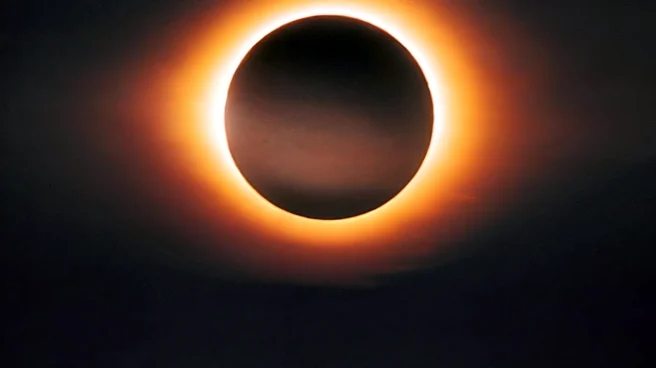
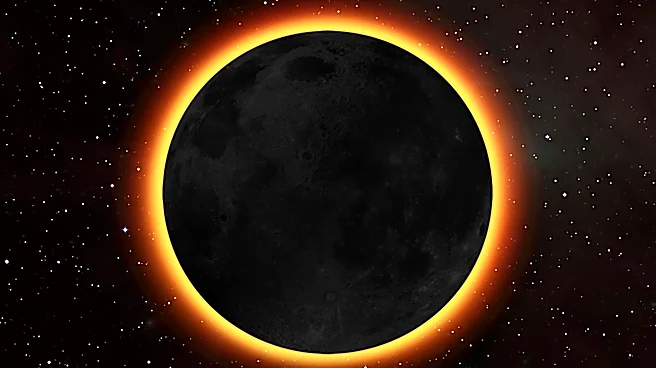
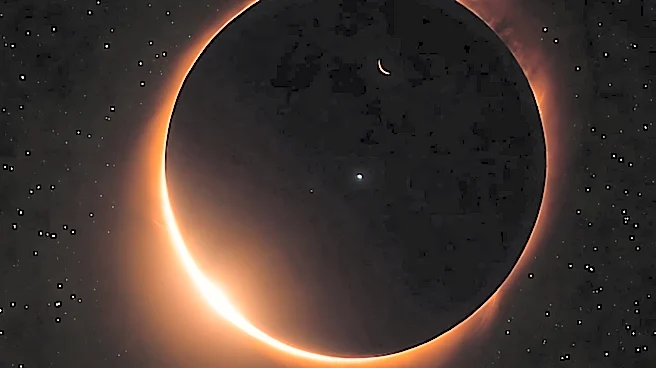
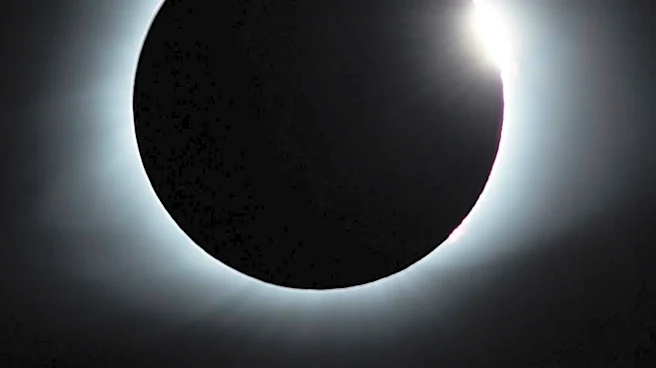
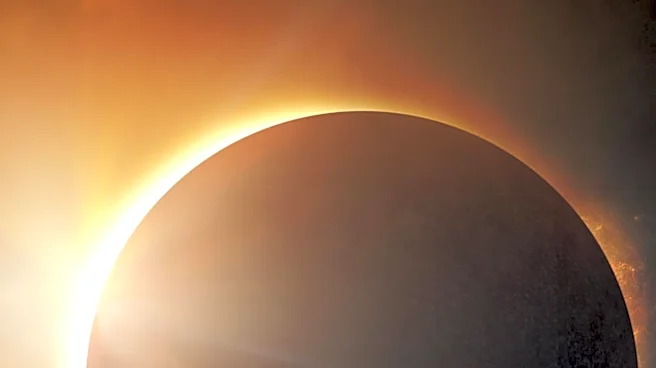
A total solar eclipse is scheduled for August 2, 2027, and is expected to last up to six minutes and 23 seconds at its peak, making it one of the longest in several decades. According to NASA, this eclipse will be visible across parts of Africa, Europe,
and the Middle East, but only a partial view will be available in the United States, specifically in parts of Maine. The eclipse's path of totality will cross countries such as Spain, Morocco, Algeria, Tunisia, Libya, Egypt, and Saudi Arabia, among others. This event follows a previous total solar eclipse on April 8, 2024, which lasted four minutes and 28 seconds. The upcoming eclipse is anticipated to be the longest until 2114, offering a rare opportunity for sky gazers and astronomers to observe this celestial phenomenon.
Why It's Important?
The August 2027 solar eclipse is significant due to its extended duration, providing a unique opportunity for scientific observation and public engagement. Eclipses offer valuable insights into solar and lunar dynamics, allowing researchers to study the sun's corona and other atmospheric phenomena. For the regions within the path of totality, the eclipse presents an opportunity to boost tourism and local economies, as enthusiasts travel to witness the event. In the United States, although the eclipse will only be partially visible, it still offers educational opportunities for schools and communities to engage in astronomy-related activities. The anticipation surrounding this event highlights the public's interest in astronomical phenomena and the potential for increased investment in space science and education.
What's Next?
As the date of the eclipse approaches, preparations will likely intensify in regions within the path of totality. Governments and tourism boards may develop strategies to accommodate the influx of visitors, including organizing viewing events and educational programs. In the United States, educational institutions and science organizations may plan activities to maximize public engagement, despite the limited visibility. Researchers will prepare to utilize the extended duration of the eclipse for scientific studies, potentially leading to new discoveries about solar and lunar interactions. The event may also inspire future interest in astronomy and space exploration, encouraging investment in related fields.
Beyond the Headlines
The cultural significance of solar eclipses extends beyond scientific observation, often inspiring art, literature, and folklore. This upcoming eclipse may influence cultural expressions and community events, fostering a sense of global connection as people across continents share in the experience. Additionally, the event underscores the importance of international collaboration in space science, as researchers from different countries work together to study the eclipse's effects. The anticipation and preparation for the eclipse highlight the role of science communication in engaging the public and promoting understanding of astronomical phenomena.