





What's Happening?
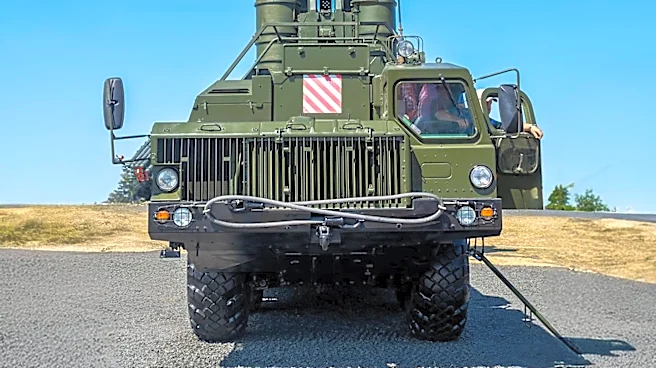
A position of Russian S-300/S-400 air defense systems near Kerch in temporarily occupied Crimea has been reconnoitered. According to the Crimean Wind Telegram channel, as reported by Ukrinform, the position includes two air defense launchers, a 91N6E
radar station, and a combat control post. This system is noted to provide air defense coverage for the Kerch Peninsula and the Kerch Strait. This development follows previous actions where the Defense Intelligence of Ukraine (DIU) reportedly struck two Russian S-400 Triumf air defense launchers and a drone-control antenna in Crimea. The ongoing reconnaissance highlights continued efforts to monitor and potentially target Russian military assets in the region.
Why It's Important?
The reconnaissance of Russian air defense systems in Crimea is significant due to the strategic importance of the Kerch Peninsula and the Kerch Strait. These areas are crucial for Russia's logistical and military operations, connecting mainland Russia to Crimea. The presence and monitoring of advanced S-300/S-400 systems, which are designed to defend against aircraft and ballistic missiles, underscore the high-stakes military environment in the region. Successful reconnaissance could provide critical intelligence for future operations, potentially enabling Ukraine to degrade Russia's air defense capabilities and disrupt its control over key territories. The ongoing conflict in Ukraine has seen both sides targeting critical infrastructure and military assets, making intelligence gathering on such systems a vital component of the broader strategic landscape. The ability to identify and potentially neutralize these systems could alter the balance of power in the Black Sea region and impact the flow of supplies and personnel.
What's Next?
Following the reconnaissance, there is a potential for further actions aimed at neutralizing or degrading the identified Russian air defense systems. The information gathered could be used to plan future strikes, similar to the previous actions by the Defense Intelligence of Ukraine against S-400 systems. Such operations would likely aim to weaken Russia's air defense umbrella over Crimea, potentially opening up opportunities for Ukrainian forces to conduct more effective drone or missile attacks against other strategic targets in the peninsula. Russia, in response, may seek to enhance the camouflage, mobility, or defensive measures around its air defense installations. The ongoing intelligence gathering and potential subsequent military actions will likely contribute to the dynamic and evolving nature of the conflict in the region, with both sides continuously adapting their strategies based on new information and capabilities.
Beyond the Headlines
The continuous reconnaissance and targeting of advanced air defense systems like the S-300/S-400 highlight a broader trend in modern warfare: the critical role of intelligence and precision strikes against high-value military assets. Beyond the immediate tactical implications, the ability to effectively locate and potentially neutralize these systems has significant strategic consequences. It forces adversaries to expend resources on defense, potentially diverting them from offensive operations, and can erode their overall military confidence. This ongoing technological and intelligence battle also underscores the importance of electronic warfare and counter-intelligence measures, as both sides strive to gain an advantage in detecting and evading enemy systems. The long-term implications could include a shift in military doctrine, emphasizing distributed and mobile air defense assets, and a greater reliance on stealth and electronic countermeasures to penetrate sophisticated defense networks.