



What's Happening?
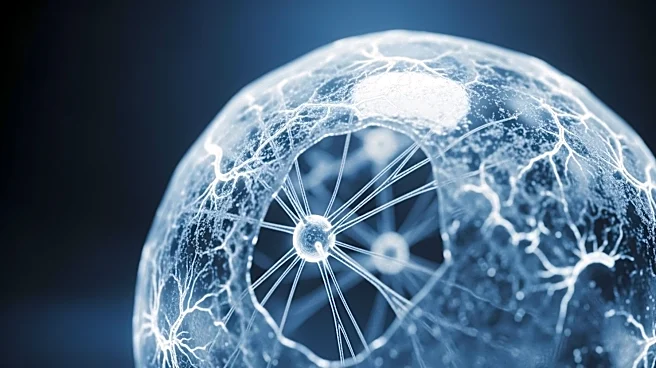
In a groundbreaking study, researchers have successfully demonstrated that frozen brain tissue from mice can return to normal function after being subjected to extremely cold conditions. The study, conducted by a team of German scientists, involved cooling
slices of mouse hippocampal tissue, which is associated with memory and learning, to minus 196 degrees Celsius. The findings revealed that the neurons and synapses necessary for learning and memory maintained their structural integrity and resumed normal activity after rewarming. This research suggests that brain tissue is more resilient than previously believed, extending its tolerance from hypothermic to cryogenic states. The study, published in the Proceedings of the National Academy of Sciences, marks a significant step towards the possibility of human hibernation, which could have applications in space travel.
Why It's Important?
The implications of this study are profound, particularly for the future of space exploration. The ability to induce a state of hibernation in humans could revolutionize long-duration space travel by reducing the need for resources such as food and water. This could make interstellar travel more feasible, potentially allowing humans to reach distant stars like Alpha Centauri. Additionally, the research could pave the way for advancements in medical science, particularly in the preservation of organs for transplantation. However, significant challenges remain, including the need to develop better cooling and rewarming methods for larger volumes of tissue and to validate these findings in larger animal models. The study highlights the potential for scientific breakthroughs in understanding and manipulating biological processes at extremely low temperatures.
What's Next?
While the study represents a significant advancement, there is still a considerable gap before these findings can be applied to humans. Further research is needed to explore the mechanisms that could induce hibernation in humans and to develop practical applications for cryogenic preservation. The researchers emphasize the need for sustained research funding to continue exploring these possibilities. A spinoff company, Hiber, has been established to advance the cryopreservation of human neural tissue and other organs, with the aim of creating a 'biological archive' for future research. The potential applications of this research extend beyond space travel, offering new possibilities for medical science and organ transplantation.
Beyond the Headlines
The study raises ethical and practical questions about the future of human hibernation and its potential uses. While the prospect of cryogenic preservation offers exciting possibilities, it also challenges our understanding of life and death, particularly in the context of preserving human tissue post-mortem. The research could lead to new discussions about the ethical implications of extending human life and the potential societal impacts of such technologies. As scientists continue to explore the boundaries of cryogenic science, these broader questions will need to be addressed to ensure that advancements are made responsibly and ethically.