






What's Happening?
In January 1776, British forces, led by Governor Lord William Campbell, withdrew from Charleston Harbor, marking a significant turning point in the American Revolution in South Carolina. This withdrawal followed months of escalating tensions, rebel actions,
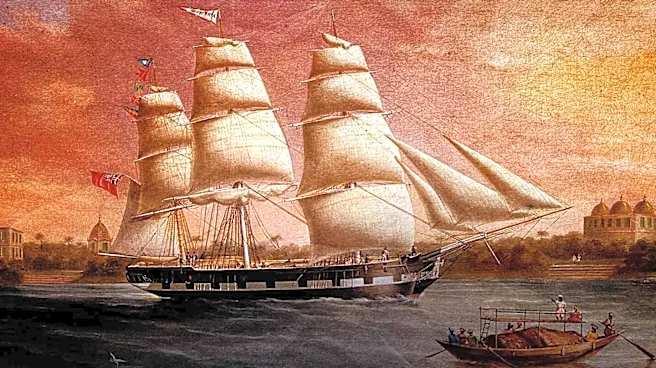
and dwindling provisions for the British ships. The British vessels, including the Tamar, Cherokee, and others, departed for Tybee Island, Georgia, after a final skirmish and the acquisition of provisions through a covert operation. This departure effectively ceded control of Charleston Harbor to the American rebels, who immediately began fortifying Sullivan's Island, leading to the construction of what would become Fort Moultrie.
Why It's Important?
The British withdrawal from Charleston Harbor was a pivotal moment for the American Revolution in South Carolina, signifying a major victory for the rebel cause and a critical step towards the colony's independence. This event allowed the provincial government to consolidate its authority and focus on defending its strategic port. The subsequent fortification of Sullivan's Island demonstrated the rebels' commitment to securing their gains and preparing for future British attempts to reclaim the area. This shift in control had profound implications for the military and political landscape of the Southern colonies, bolstering American morale and weakening British influence in the region.
What's Next?
Following the British withdrawal, the American rebels in Charleston immediately focused on strengthening their defenses, particularly on Sullivan's Island. The Council of Safety appointed a committee to assess and implement measures for securing the harbor, leading to the construction of a strong fort and battery. This fortification effort would culminate in the Battle of Sullivan's Island in June 1776, where the newly constructed Fort Sullivan (later Fort Moultrie) successfully repelled a British naval attack. The British forces, after regrouping and receiving reinforcements, would eventually attempt to reassert control, setting the stage for further conflicts in the Southern theater of the war.
Beyond the Headlines
This event highlights the complex interplay of military strategy, logistics, and political will during the American Revolution. The British struggle with provisions and the effectiveness of rebel tactics, such as cutting off supplies and raiding loyalist strongholds, underscore the challenges of maintaining control in a hostile territory. The narrative also touches upon the human element of conflict, including the plight of enslaved fugitives who sought freedom with the British but became refugees. The rapid transition of power and the immediate focus on defense by the rebels illustrate the nascent stages of self-governance and the determination to establish an independent state, laying the groundwork for the future United States.