



What's Happening?
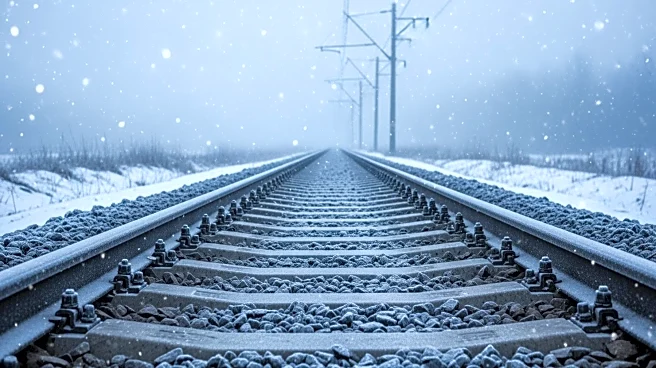
A severe winter storm, named Elli, has caused significant disruptions to train services in northern Germany. Deutsche Bahn, the country's rail operator, has temporarily halted long-distance services in the region due to heavy snowfall and snowdrifts.
The storm has particularly impacted the Hannover area, a crucial hub for rail traffic, leading to a complete standstill. The German Weather Service has forecasted up to 15 centimeters of snowfall, with temperatures potentially dropping to -20°C in some areas. Deutsche Bahn has deployed thousands of employees to clear tracks and has provided waiting trains for stranded passengers in cities like Hamburg, Berlin, and Kassel.
Why It's Important?
The disruption of train services in northern Germany highlights the vulnerability of transportation infrastructure to severe weather conditions. This incident underscores the importance of preparedness and resilience in public transport systems, especially in regions prone to harsh winter weather. The halt in services affects not only daily commuters but also the broader economy, as delays and cancellations can lead to significant economic losses. The situation also raises questions about the adequacy of current infrastructure and emergency response strategies in handling extreme weather events.
What's Next?
Deutsche Bahn plans to resume long-distance services once conditions improve, but nationwide disruptions and cancellations are expected to continue. The company is using the downtime to reposition trains and clear tracks. The ongoing situation may prompt discussions among policymakers and transportation authorities about enhancing infrastructure resilience and improving emergency response protocols to better handle future weather-related disruptions.