


What's Happening?
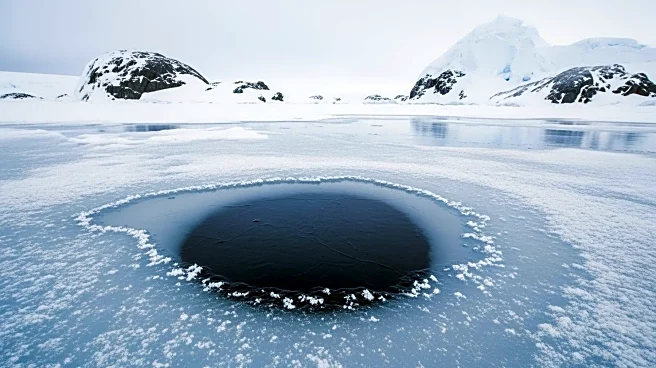
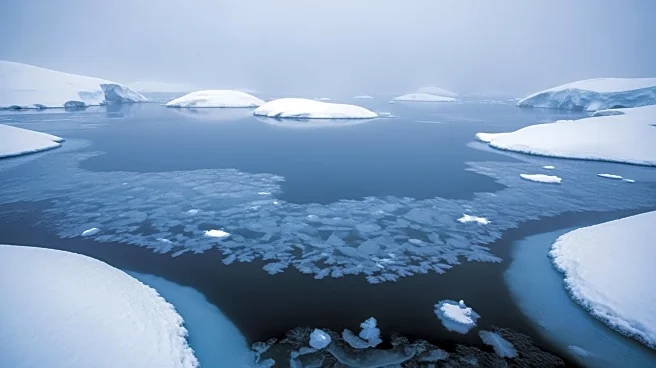
NASA has released new insights into Lake Unter-See, one of Antarctica's largest and deepest lakes, known for its unique water chemistry and microbial life. The lake, covered by ice year-round, features high levels of dissolved oxygen and low carbon dioxide,
with a strongly alkaline pH. It hosts large conical stromatolites, microbial structures that offer a glimpse into early Earth life. Recent studies have shown that glacial lake outburst floods have altered the lake's water levels and chemistry, potentially enhancing microbial productivity. These findings provide valuable data for understanding similar environments on icy moons and early Mars.
Why It's Important?
The study of Lake Unter-See offers critical insights into ancient microbial life and the conditions that may have supported it. The lake's stromatolites are modern analogs of some of Earth's oldest fossils, providing a window into the planet's early biosphere. Understanding these environments can inform astrobiological research, particularly in the search for life on other planets and moons with similar conditions. The findings also contribute to our knowledge of how Antarctic ecosystems respond to environmental changes, which is crucial for predicting the impacts of climate change on polar regions.
What's Next?
Future research may focus on further exploring the microbial communities in Lake Unter-See and their responses to environmental changes. Scientists might conduct comparative studies with other Antarctic lakes and icy environments on Earth to better understand the potential for life on other planets. The data collected could also be used to refine models of early Earth conditions and inform the design of future space missions targeting icy moons like Europa and Enceladus. Continued monitoring of the lake's water levels and chemistry will be essential to track the impacts of glacial lake outburst floods.