



What's Happening?
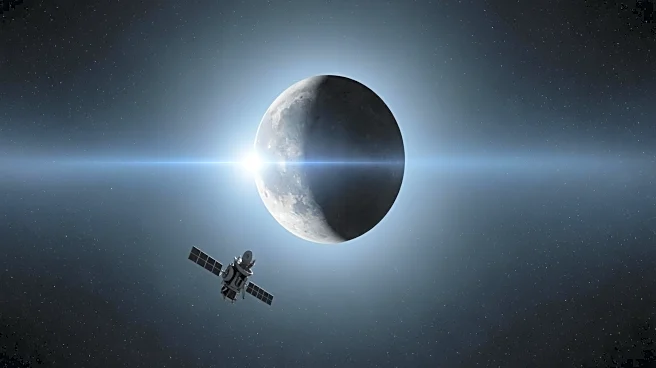
On March 3, 2026, a total lunar eclipse was visible across the Americas, East Asia, Australia, and the Pacific, offering a spectacular 'Blood Moon' display. During this event, NASA's NOAA-21 satellite used the VIIRS day-night band to capture the eclipse's
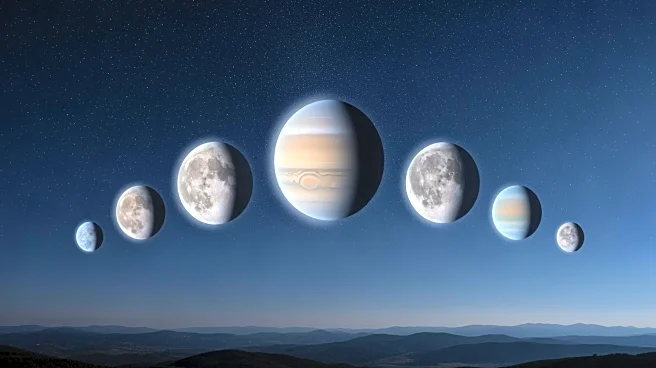
impact on Earth's surface. The satellite's images revealed variations in moonlight reflected back to Earth, with the darkest swath occurring shortly after the total eclipse phase began. This allowed for clear views of the aurora borealis and artificial lights in Alaska and the Yukon. The eclipse's progression was documented, showing changes in brightness as the Moon moved through its phases.
Why It's Important?
This lunar eclipse provided a unique opportunity for scientists to study the effects of reduced moonlight on Earth's surface. The data collected by the VIIRS instrument can enhance our understanding of how natural and artificial light sources interact during such events. Additionally, the eclipse served as a reminder of the interconnectedness of celestial phenomena and their impact on Earth. The observations contribute to ongoing research in astronomy and atmospheric sciences, offering insights into the behavior of light in different environmental conditions.
What's Next?
The next total lunar eclipse is scheduled for December 31, 2028, providing another opportunity for observation and study. Scientists will continue to analyze the data from the March 2026 eclipse to refine their understanding of lunar and atmospheric interactions. Future eclipses will likely be observed with even more advanced technology, allowing for more detailed and comprehensive data collection. These events will continue to captivate the public and inspire interest in astronomy and space science.