




What's Happening?
The Swedish Armed Forces are set to operate military communications over Telia's nationwide commercial 5G network, with Ericsson providing the infrastructure. This initiative, supported by the Swedish Defence Materiel Administration (FMV), aims to bolster
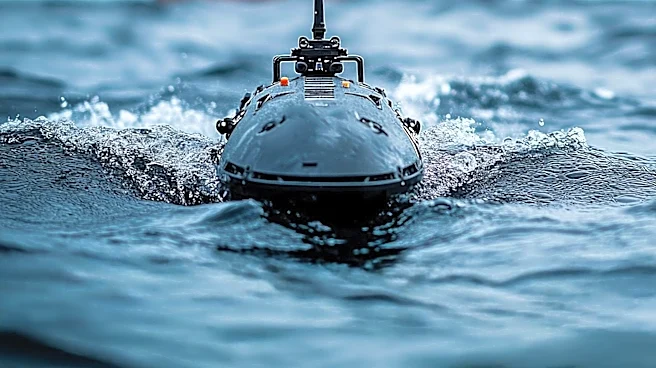
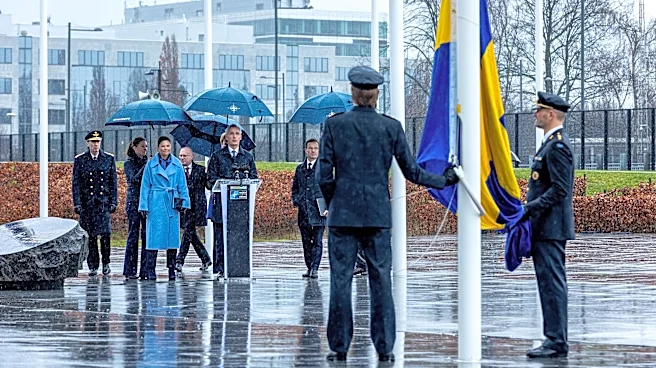
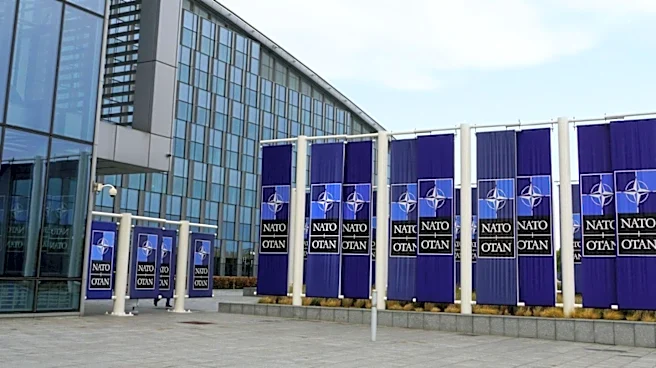
military capabilities and communications across various domains. The 5G coverage will extend to military bases, allow for temporary field deployments at unit locations and emergency airbases, and be integrated into moving military assets such as amphibious craft, frigates, and transport aircraft. This new system will complement existing military communication systems rather than replace them. Politically, the Swedish government has tasked its armed forces with establishing an innovation platform to develop next-generation wireless networks under NATO’s Rapid Adoption Action Plan. Both Sweden and Finland have been designated by NATO to lead future military wireless communications through its Innovation Range initiative. Major General Mattias Hanson, Head of Cyber Defence for the Swedish Armed Forces, emphasized Sweden's active role in developing these technologies for NATO members' defense, leveraging Nordic telecommunications expertise.
Why It's Important?
This development signifies a crucial step in integrating advanced commercial technology into national defense strategies, potentially setting a precedent for other NATO members. By leveraging existing 5G infrastructure, Sweden can enhance its military's communication resilience, speed, and data handling capabilities, which are vital in modern warfare. The collaboration with Ericsson, a global leader in telecommunications, ensures access to cutting-edge technology, including drone detection through 5G's Integrated Sensing and Communication (ISAC) capabilities. This move also strengthens Sweden's strategic position within NATO, demonstrating its commitment to collective defense and technological innovation. The initiative highlights a broader trend of nations seeking to integrate civilian technological advancements into military applications to gain a strategic edge and improve interoperability among allies. The focus on developing future communication technologies within NATO's framework underscores the alliance's push for technological superiority and adaptability in an evolving threat landscape.
What's Next?
Ericsson plans to initiate small-scale, sensing-only commercial pilots for its ISAC technology in 2027, with wider-scale deployments anticipated in 2028. These pilots will serve as the first market proof points for the sensing technology, with the Swedish armed forces acting as an active testing environment. This phased rollout suggests a deliberate approach to integrating and refining these advanced capabilities. Furthermore, the European Commission is advancing a proposal for a new EU Critical Communication System (EUCCS) for emergency services, which would provide secure, resilient, and cross-border interoperable communication for police, firefighters, and medical services. This system, intended to span 31 EU and Schengen countries, aims to enable real-time data, video, and message sharing. Member States are expected to begin connecting to this system from 2030, indicating a long-term vision for enhanced civil protection communication across Europe. These initiatives collectively point towards a future where advanced wireless technologies play a central role in both military and civil security operations.
Beyond the Headlines
The integration of 5G into military networks raises significant implications for cybersecurity and national security. While commercial networks offer widespread coverage and advanced capabilities, their use for military purposes necessitates robust security measures to protect against cyber threats and espionage. The concept of 'network sensing' for drone detection, as demonstrated by Ericsson, could revolutionize airspace security, offering a passive yet pervasive surveillance capability that detects objects not connected to the network. This could lead to new doctrines in air defense and border security. Moreover, the emphasis on cross-border interoperability for emergency services through the EUCCS highlights the growing recognition of the need for seamless communication during multinational crises, whether natural disasters or security incidents. This convergence of military and civilian communication technologies, while offering efficiencies, also blurs traditional lines, potentially leading to new regulatory and ethical challenges regarding data privacy and surveillance in a more interconnected security landscape.