




What's Happening?
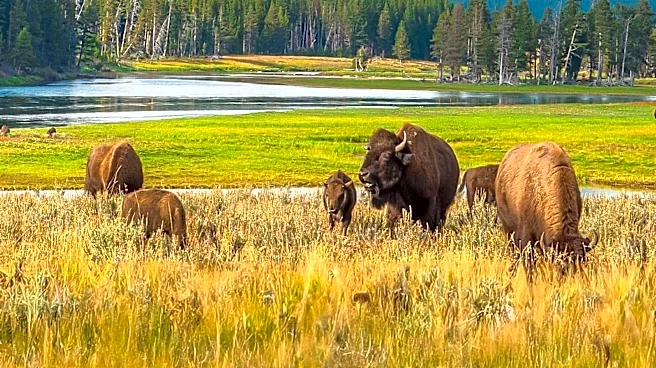
A recent video posted by T. Lyn Neufeld Photography on YouTube shows tourists getting dangerously close to a massive bison. This incident highlights a recurring issue where individuals underestimate the potential threat posed by wild animals, particularly
bison. Despite numerous warnings and past incidents of bison attacks, some tourists continue to approach these large and powerful animals, often leading to dangerous encounters. The video has garnered significant attention, with many online commenters expressing disbelief at the tourists' lack of judgment. This behavior is not isolated, as previous reports have detailed similar situations where individuals have been injured or faced serious risks due to their proximity to bison in natural habitats.
Why It's Important?
The repeated instances of tourists getting too close to bison underscore a critical public safety issue in U.S. national parks and wildlife areas. These animals, while appearing docile, are wild and can be aggressive when they feel threatened, possessing the size and power to cause severe injury or even death. This behavior not only endangers the individuals involved but also creates potential risks for park rangers and emergency services who may need to intervene. Furthermore, such incidents can lead to increased stress for the wildlife, potentially altering their natural behaviors and habitats. The prevalence of these encounters suggests a need for more effective public education campaigns and stricter enforcement of wildlife interaction guidelines to protect both humans and animals.
What's Next?
Authorities in national parks and wildlife reserves are likely to continue emphasizing and potentially reinforcing existing guidelines regarding safe distances from wildlife. This may involve increased signage, more frequent ranger patrols, and educational initiatives aimed at informing visitors about the dangers of approaching wild animals like bison. There could also be discussions about implementing stricter penalties for those who violate these safety protocols. The ongoing public discourse surrounding such videos may also prompt a reevaluation of how information about wildlife safety is disseminated to tourists, potentially exploring new and more impactful ways to convey the seriousness of these risks.
Beyond the Headlines
The phenomenon of tourists dangerously approaching wild animals like bison reflects a broader societal disconnect with nature and a potential over-reliance on mediated experiences. The desire for unique photos or close encounters, often fueled by social media trends, can override common sense and safety precautions. This raises ethical questions about human responsibility in natural environments and the impact of human presence on wildlife. It also highlights the challenge of balancing public access to natural wonders with the imperative to protect both visitors and the ecosystem. The underlying issue may stem from a lack of understanding about animal behavior and the inherent unpredictability of wild creatures, suggesting a need for more comprehensive ecological education.