


What's Happening?
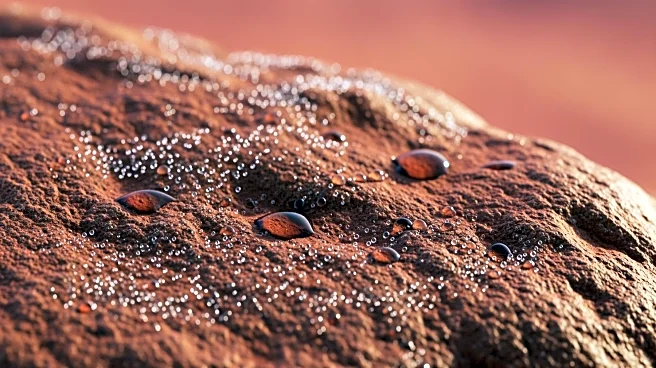
Researchers at Pennsylvania State University have conducted experiments to assess the habitability of Mars regolith using tardigrades, microscopic animals known for their resilience. The study found that tardigrades struggled to survive in simulated Mars soil,
but their survival improved significantly when the soil was rinsed with water. This suggests that certain harmful compounds in the regolith can be washed away, potentially aiding future agricultural efforts on Mars. The research aims to understand how Mars' environment might impact living organisms and how these organisms could, in turn, affect the Martian environment.
Why It's Important?
This research is crucial for future Mars exploration and colonization efforts, as it provides insights into the potential for growing plants and sustaining life on the planet. Understanding the interactions between Martian soil and terrestrial organisms is vital for developing sustainable life-support systems for human missions. The findings could inform strategies for mitigating harmful effects of Martian soil on both plants and humans, contributing to the broader goal of establishing a self-sustaining human presence on Mars. Additionally, the study highlights the importance of planetary protection by identifying natural defense mechanisms in Martian soil that could prevent contamination from Earth.
What's Next?
Further research is needed to isolate the specific compounds in Mars regolith that are harmful to tardigrades and other organisms. Scientists will continue to explore the potential for modifying Martian soil to support plant growth and human habitation. Future studies may also examine other environmental factors on Mars, such as radiation and temperature, to develop comprehensive strategies for sustaining life. As crewed missions to Mars become more feasible, these findings will play a critical role in planning and executing successful long-term missions.