







What's Happening?
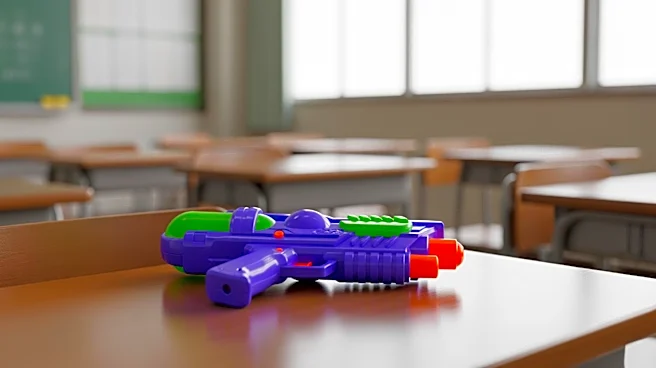
A high school senior from Portage, Indiana, Adrian Williams, has been charged with felony intimidation after a water gun he was using in a game was mistaken for a real firearm. The incident occurred during a game of 'Senior Assassin,' a tradition among
local high school seniors, where participants use water guns to 'eliminate' each other. Police were called to a Planet Fitness location after receiving reports of a man with a gun, leading to a significant police response. Officers found Williams in his car with a water gun that appeared realistic from a distance. The situation was initially perceived as an active shooter threat, prompting a rapid response from multiple officers. Williams was detained and later released on bond, with a court hearing scheduled for April 22.
Why It's Important?
This incident highlights the potential dangers of realistic-looking toy weapons, especially in public spaces. The police response underscores the seriousness with which such reports are treated, reflecting broader concerns about gun violence and public safety. The case raises questions about the responsibilities of individuals participating in games that could be misinterpreted as threats. It also illustrates the challenges law enforcement faces in distinguishing between real and perceived threats, which can lead to significant resource allocation and potential risks to public safety. The decision to charge Williams with a felony, albeit a lower-level one, suggests a cautious approach by prosecutors, balancing the need for accountability with the recognition of the incident's context.
What's Next?
Williams is scheduled for a court hearing on April 22, where the legal proceedings will continue. The outcome could influence how similar incidents are handled in the future, potentially leading to discussions about the regulation of realistic toy weapons and the responsibilities of participants in such games. The case may also prompt schools and communities to reconsider the advisability of games like 'Senior Assassin,' especially in light of the potential for misunderstanding and the risks involved. Law enforcement and educational institutions might collaborate to develop guidelines to prevent similar incidents.