



What's Happening?
The Norwegian government has announced its decision to take over the planning of the Fen rare earth deposit, which is the largest in Europe, to expedite its development. This move follows a recent resource upgrade that nearly doubled the estimated size
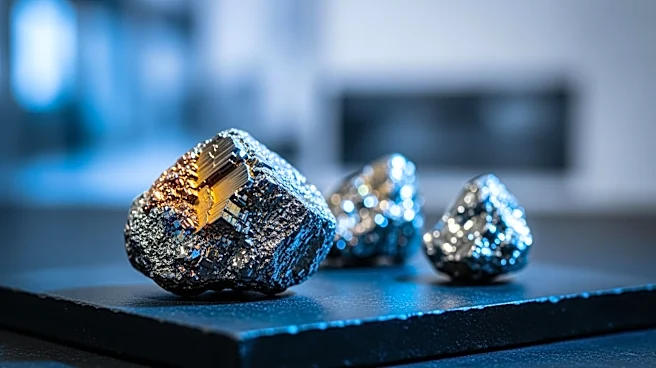
of the deposit to 15.9 million metric tons of rare earth oxide. The Fen deposit, located in Telemark, Norway, is seen as crucial for reducing Europe's reliance on China, which currently dominates the production and processing of critical minerals. The deposit contains significant amounts of neodymium and praseodymium (NdPr), which are essential for manufacturing permanent magnets used in electric vehicles, wind turbines, electronics, and defense applications. The government intervention aims to prevent land-use disputes and streamline the permitting process to ensure national and EU supply security.
Why It's Important?
The development of the Fen rare earth deposit is significant for Europe as it seeks to reduce its dependency on China for critical minerals. With no operating rare earth mines in Europe, the Fen project is pivotal for enhancing the region's supply security and competitiveness. The materials extracted from Fen, particularly NdPr, are vital for various high-tech and green technologies, including electric vehicles and renewable energy systems. By accelerating the development of this deposit, Norway is positioning itself as a key player in the global rare earth market, potentially influencing the geopolitical landscape of mineral supply chains. This move could also stimulate economic growth in the region and create new job opportunities.
What's Next?
The Norwegian government plans to address potential land-use disputes and balance national interests with local concerns, as similar infrastructure projects in Europe have faced opposition from environmental and agricultural groups. Rare Earths Norway, the developer of the project, anticipates starting production by late 2031, with an expected output of 800 tons of NdPr by 2032, which would meet about 5% of the European Union's demand. The success of this project could encourage other European countries to explore and develop their own rare earth resources, further reducing reliance on external suppliers.