
What's Happening?
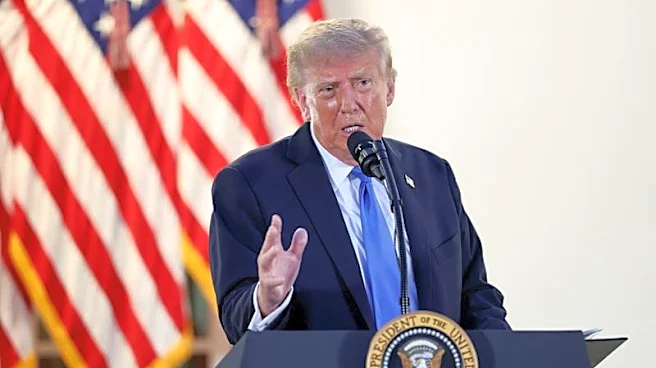
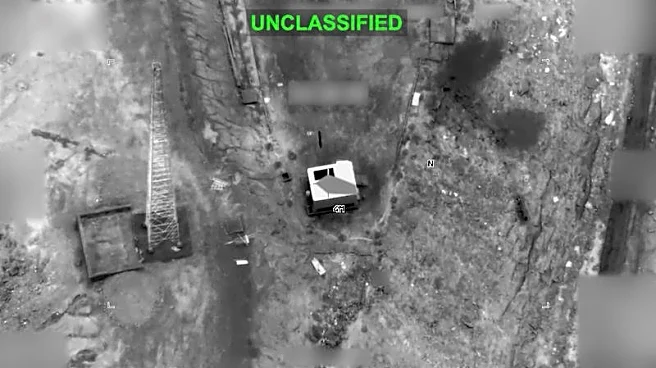
President Trump has repeatedly threatened to bomb a facility in Iran known as 'Pickaxe Mountain,' located in the Zagros range near the Natanz enrichment complex. This site, officially unnamed by Iran,
is a mountain called Kuh-e Kolang Gaz La, with 'kolang' meaning pickaxe. Construction on the facility began in late 2020, following an attack on an above-ground centrifuge assembly plant at Natanz, which Iran stated the underground halls would replace. The International Atomic Energy Agency (IAEA) has not been granted access to the site, which is protected by a double security perimeter. Analysts from the Institute for Science and International Security, who have monitored the construction via satellite, believe the facility is large enough to house not only an assembly plant but also a working enrichment plant capable of producing weapons-grade uranium and potentially weaponization work. The facility is at least 100 meters deep within hard, dense granite, providing substantial natural protection. Iran's foreign ministry spokesman, Esmail Baghaei, denies any nuclear activity at the site, calling American threats a 'fabricated pretext for aggression.'
Why It's Important?
The repeated threats by President Trump to strike 'Pickaxe Mountain' underscore the escalating tensions surrounding Iran's nuclear program and the broader geopolitical landscape in the Middle East. The facility's deep underground location and the uncertainty surrounding its contents present a significant challenge for international monitoring and potential military action. If the site is indeed capable of producing weapons-grade uranium, it represents a critical step towards Iran potentially developing nuclear weapons, a development that the U.S. and its allies have consistently sought to prevent. The concentration of nuclear technology designs from China and Russia, as noted by the International Energy Agency, also highlights a growing concern about supply chain diversity and potential risks for the future of nuclear energy globally. The situation at 'Pickaxe Mountain' could trigger a wider conflict in the region, with Iran's military command warning of severe repercussions for any attack on its nuclear or sensitive sites.
What's Next?
The immediate future will likely involve continued monitoring of 'Pickaxe Mountain' by satellite and intelligence agencies to ascertain its operational status and contents. President Trump's threats suggest that military action remains a possibility if diplomatic efforts fail or if intelligence indicates a significant advancement in Iran's nuclear capabilities at the site. However, experts are skeptical about the effectiveness of conventional bunker-buster bombs against the facility's depth and granite composition, suggesting that any attack would likely target vulnerable points like power supplies, ventilation shafts, and tunnel entrances. The Institute for Science and International Security believes the site is not yet operational, and construction continues. Iran's response to any potential strike is a major unknown, with warnings of regional destabilization. The international community will be closely watching for any diplomatic breakthroughs or further escalations in rhetoric or action.
Beyond the Headlines
The 'Pickaxe Mountain' situation highlights the complex interplay between technological advancements in nuclear infrastructure, international diplomacy, and military strategy. The facility's design, leveraging natural geological protection, reflects a strategic adaptation by Iran to counter potential aerial attacks, pushing the boundaries of conventional military capabilities. This development could accelerate research into more advanced penetration technologies or alternative methods of neutralization, such as ground operations or cyber warfare, as suggested by the Institute for Science and International Security. The lack of transparency from Iran regarding the site's purpose and the IAEA's inability to access it further erode trust and complicate international efforts to prevent nuclear proliferation. The ongoing construction and the ambiguity surrounding its ultimate function also raise ethical questions about the responsibility of nations to disclose sensitive nuclear activities and the potential for miscalculation in a highly volatile region.