
What's Happening?
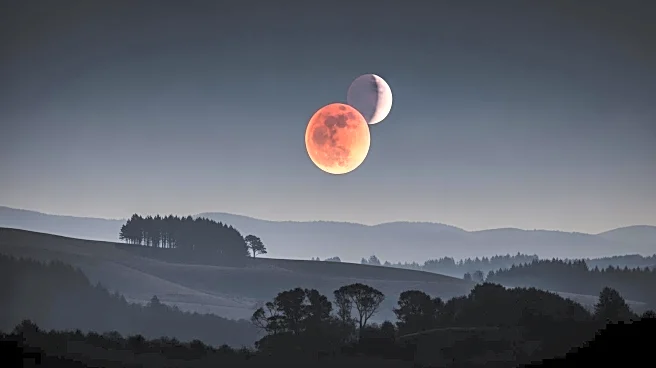
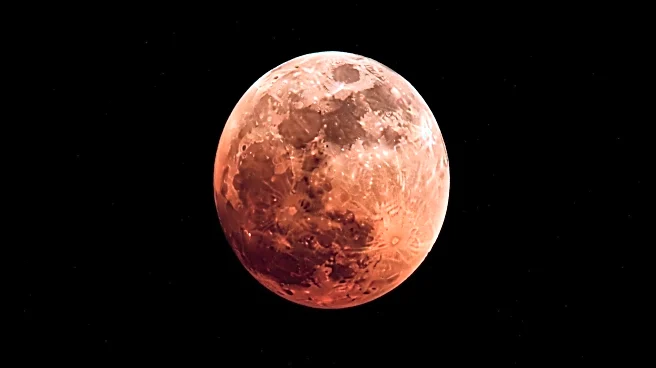
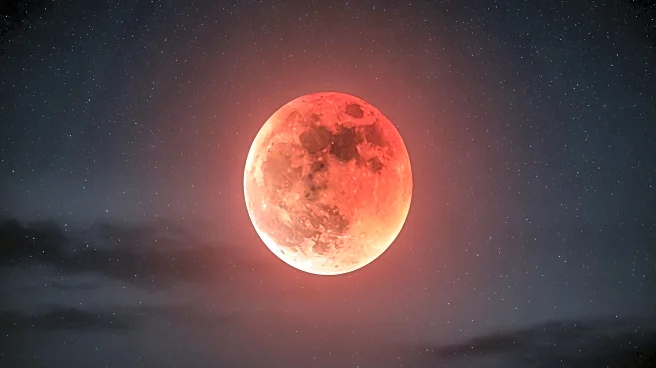
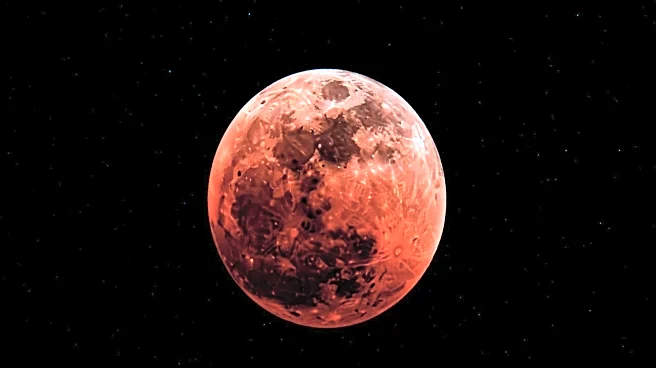
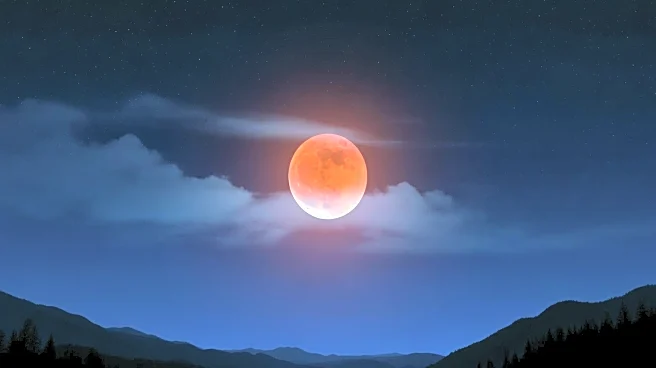
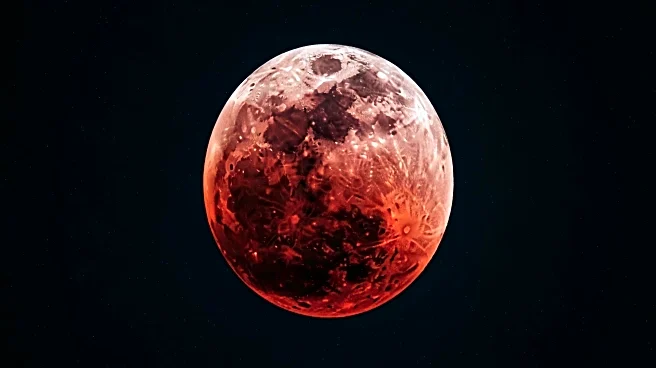
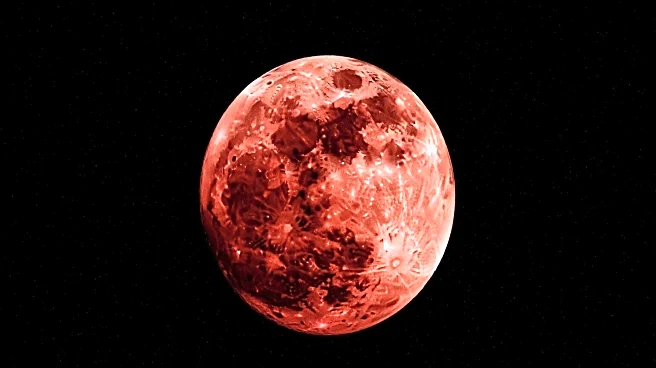
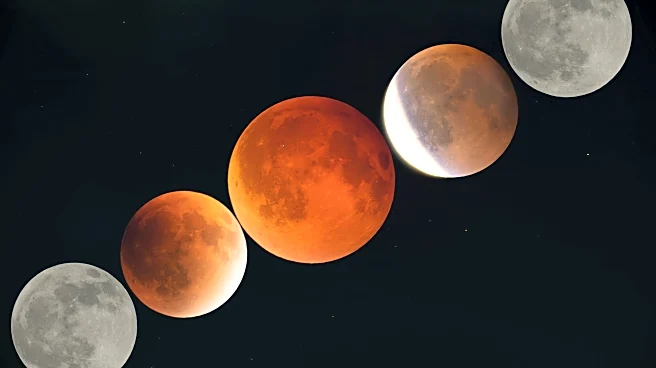
On March 3, 2026, a total lunar eclipse, commonly referred to as a 'blood Moon,' occurred, captivating observers across North America, East Asia, Australia, and New Zealand. During this celestial event, the Moon appeared red as the Earth passed between
the Sun and the Moon, casting a shadow on the lunar surface. This phenomenon was not visible in the UK, Europe, or Africa. The eclipse was highly anticipated, with many capturing images of the Moon turning a deep, rusty red at the peak of totality. The red hue is caused by sunlight being refracted through Earth's atmosphere. The event was widely documented, with images shared from various locations, including Los Angeles, Toronto, and Sydney.
Why It's Important?
Lunar eclipses, particularly total ones, are significant for both scientific observation and public interest. They provide an opportunity for scientists to study the Earth's atmosphere and its effects on light. For the public, such events spark interest in astronomy and provide a shared experience of observing a rare natural phenomenon. The widespread visibility of this eclipse across multiple continents allowed for a global audience to engage with the event, fostering a sense of connection through shared observation. Additionally, the documentation and sharing of images contribute to cultural and scientific archives, preserving the event for future reference.