






What's Happening?
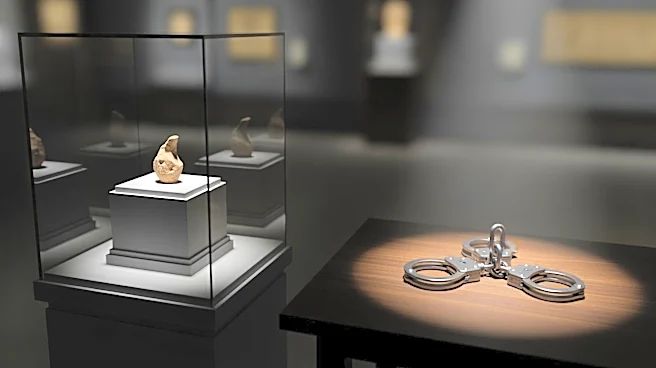
A Dutch court has sentenced three men to 47 months in prison each for their involvement in the theft of Iron Age artifacts from the Drents Museum in Assen, Netherlands. The heist, which occurred in January 2025, involved the theft of three golden spiral
bracelets and the Coțofenești helmet, all loaned from the National History Museum of Romania. The theft led to tensions between Romania and the Netherlands, resulting in the firing of the Romanian museum director and a €5.7 million insurance payout from Dutch authorities to Romania. The artifacts were partially recovered in April 2026, following a plea deal with two of the suspects.
Why It's Important?
The sentencing marks a significant development in international art crime, highlighting the challenges of protecting cultural heritage. The incident strained diplomatic relations between Romania and the Netherlands, emphasizing the importance of international cooperation in cultural preservation. The substantial insurance payout underscores the financial implications of art thefts, while the recovery of artifacts through plea deals illustrates the complexities of legal proceedings in such cases. The event serves as a reminder of the vulnerabilities faced by museums globally and the need for enhanced security measures.
What's Next?
The resolution of this case may lead to increased scrutiny and security measures in museums worldwide, particularly those hosting international exhibitions. Romanian officials may reconsider their loan policies, potentially affecting future cultural exchanges. The Dutch authorities might face pressure to improve their handling of art theft cases, possibly leading to policy changes. The incident could also prompt discussions on international legal frameworks for art crime, aiming to prevent similar occurrences in the future.
Beyond the Headlines
The heist raises ethical questions about the responsibilities of museums and governments in safeguarding cultural artifacts. It highlights the need for transparency and accountability in international cultural exchanges. The case may influence future diplomatic relations between countries involved in art loans, potentially affecting cultural diplomacy. Additionally, the incident could spark debates on the adequacy of current legal penalties for art theft, considering the cultural and historical value of stolen items.