








What's Happening?
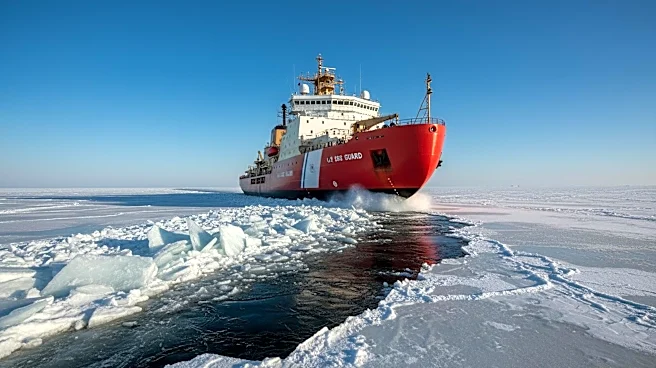
U.S. Representative Kristen McDonald Rivet, a Democrat from Bay City, Michigan, along with other members of Michigan's congressional delegation, has urged the U.S. Coast Guard to accelerate the development of a new heavy icebreaker for the Great Lakes.
This push comes after shipping industry leaders reported losing 82 days of their latest season due to insufficient icebreaking capacity. The current heavy icebreaker, the USCGC Mackinaw, was deemed only partially mission-capable this season and could not navigate the Soo Locks. According to McDonald Rivet, the Coast Guard cited personnel shortages as a reason for slow progress, a justification she acknowledged but deemed insufficient given the issue's importance to the Great Lakes region. A study by the Lake Carriers Association on the 2018-19 shipping season, which also experienced significant ice cover, estimated over 5,000 job losses dependent on the U.S.-flagged fleet's cargo delivery and more than $1 billion in lost revenue for the maritime industry. McDonald Rivet has received a written response from U.S. Coast Guard Commandant Admiral Kevin Lunday, confirming that funding for design and planning has been allocated and is under executive review, with the Coast Guard taking its congressional obligations seriously.
Why It's Important?
The lack of adequate icebreaking capabilities in the Great Lakes has significant economic repercussions for the U.S. The Great Lakes shipping industry, valued at $5 billion by the U.S. Army Corps of Engineers, is crucial for transporting essential goods, including nearly all American iron ore, which passes through the Soo Locks. Delays caused by insufficient icebreaking can lead to a nationwide reduction in steel production, impacting various sectors that rely on this fundamental material. The reported loss of over 5,000 jobs and more than $1 billion in revenue during a single season highlights the severe economic vulnerability of the region and its interconnected industries. The current fleet of 11 icebreakers, down from 20 nearly 50 years ago, is proving inadequate, especially with the USCGC Mackinaw's limitations. The call for a new icebreaker is not merely a regional concern but a national economic imperative, as disruptions in this vital transportation artery can ripple through the national supply chain and manufacturing sectors, affecting employment and economic stability.
What's Next?
The U.S. Coast Guard has confirmed that funding for the design and planning of a new heavy icebreaker for the Great Lakes has been allocated and is currently undergoing "executive review." This indicates a formal progression in the project, moving from legislative mandate to initial implementation phases. While the Coast Guard has acknowledged the importance of the issue and its congressional obligations, the timeline for actual construction and deployment remains a critical factor. Industry estimates suggest that once significant appropriations are secured and the Coast Guard begins cutting steel, a new icebreaker could be completed in approximately three years, a significant improvement from previous estimates of ten years. Continued pressure from federal lawmakers like Representative McDonald Rivet will likely be necessary to ensure sustained momentum and funding for the project. Stakeholders, including the Lake Carriers Association, will be closely monitoring the Coast Guard's progress, as the timely delivery of a new icebreaker is essential to prevent future economic losses and job disruptions in the Great Lakes region.
Beyond the Headlines
The ongoing struggle to secure a new icebreaker for the Great Lakes underscores a broader challenge in maintaining critical national infrastructure and adapting to evolving environmental conditions. The decline in the icebreaking fleet from 20 vessels to 11 over the past five decades reflects a potential underinvestment in maritime infrastructure that has now reached a critical point, impacting economic stability. This situation also highlights the complex interplay between legislative mandates, agency capacity, and economic realities. While Congress has mandated action, the Coast Guard's reported personnel shortages illustrate how broader federal resource allocation and workforce challenges can impede the execution of vital projects. Furthermore, the issue touches upon the long-term planning required for infrastructure projects, where initial cost estimates (e.g., $350 million for a new icebreaker) must be weighed against the substantial economic losses incurred from inaction. The Great Lakes icebreaking issue serves as a microcosm of the larger national debate on infrastructure modernization, resource allocation, and the strategic importance of maintaining robust capabilities to support key industries and regional economies.