


What's Happening?
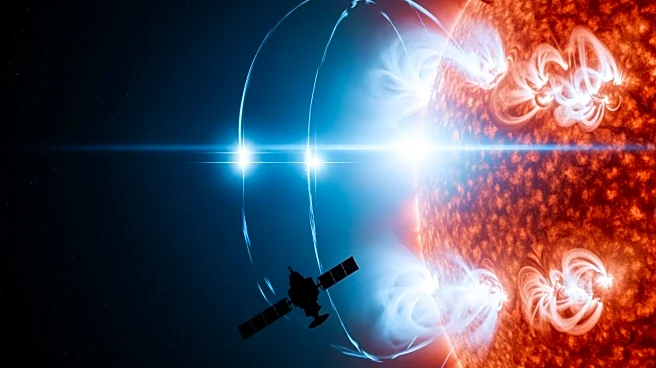
The National Weather Service's Space Weather Prediction Center is currently tracking the largest solar radiation storm in over 20 years. This storm is ranked at a level four out of five on the severity scale. It poses increased radiation risks for astronauts
in low-Earth orbit and passengers on polar flights. Additionally, the storm could disrupt satellite communications and GPS systems. Despite these potential disruptions, meteorologists have indicated that people on the ground face minimal danger. The storm is also expected to produce dazzling auroras, which may be visible across much of the northern United States and as far south as Alabama and Northern California.
Why It's Important?
The solar radiation storm highlights the vulnerability of modern technology to space weather events. Disruptions to satellite communications and GPS systems can have significant implications for various sectors, including aviation, telecommunications, and navigation. The increased radiation risk for astronauts and passengers on polar flights underscores the need for enhanced safety measures and monitoring. Furthermore, the visibility of auroras in regions not typically accustomed to such phenomena could spark public interest and awareness about space weather and its effects on Earth.
What's Next?
As the storm continues, monitoring by the Space Weather Prediction Center will be crucial to provide timely updates and warnings. Airlines operating polar routes may need to adjust flight paths to mitigate radiation exposure risks. Satellite operators will likely be on high alert to manage potential disruptions. The event may also prompt discussions among policymakers and industry leaders about improving resilience against space weather impacts, including investing in better forecasting technologies and protective measures for critical infrastructure.