



What's Happening?
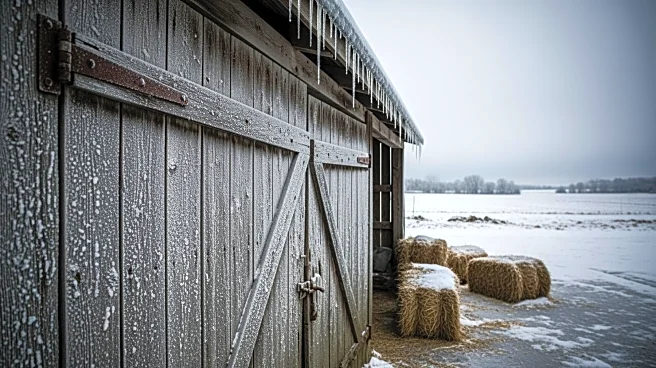
A severe winter storm over the weekend of January 31 and February 1 has led to the collapse of numerous poultry barns across Arkansas. The storm brought heavy snowfall and sleet, with some areas experiencing up to 12 inches of snow followed by nearly
2 inches of sleet. This weather event resulted in significant structural failures, particularly affecting older poultry houses. According to reports, over 100 structures have collapsed, with at least 70 of these incidents occurring in Arkansas and the remainder in Virginia. The University of Arkansas System Division of Agriculture's Hempstead County agriculture agent, Kimberly Rowe, noted that many of the affected buildings were older and uninsured, leading to significant challenges for local farmers. In addition to poultry barns, other agricultural structures such as hay and equipment storage barns have also been damaged, impacting livestock producers' access to feed and machinery.
Why It's Important?
The collapse of poultry barns in Arkansas due to the winter storm has significant implications for the agricultural sector in the region. Poultry producers, who are already facing financial pressures, now have to contend with the loss of infrastructure and potential relocation of livestock. The lack of insurance coverage for many of these older structures exacerbates the financial strain, as farmers may need to incur substantial debt to rebuild. This situation highlights the vulnerability of agricultural operations to extreme weather events and the importance of infrastructure resilience. The broader agricultural community, including livestock and specialty crop producers, is also affected, with potential long-term impacts on production and supply chains. The storm underscores the need for improved disaster preparedness and support mechanisms for farmers facing such challenges.
What's Next?
As the immediate response to the storm continues, farmers and agricultural stakeholders in Arkansas are assessing the full extent of the damage. The focus will likely shift to rebuilding efforts, with many producers needing to secure financing to replace lost infrastructure. Extension services and local agricultural agencies may play a crucial role in providing guidance and support during the recovery process. Additionally, there may be calls for policy interventions to enhance insurance coverage and disaster relief for agricultural operations. The situation also presents an opportunity for discussions on climate resilience and the adaptation of farming practices to mitigate the impact of future extreme weather events.