




What's Happening?
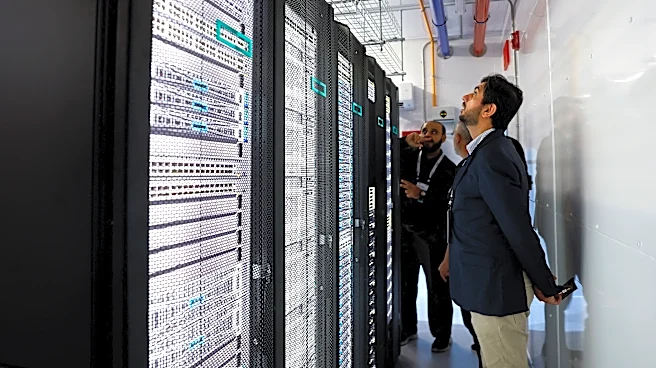
Recent reports from platforms like X and OpenAI suggest that entities linked to China are attempting to influence public opinion against data center construction in the United States. X announced it identified 200 accounts connected to China spreading
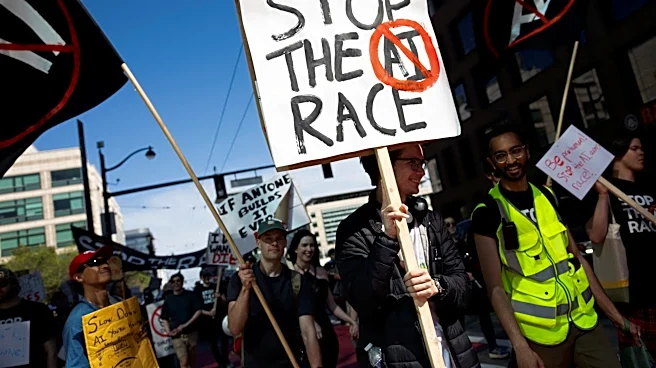
anti-data center narratives, leading to alarmist headlines. OpenAI also banned a cluster of users it linked to the Chinese government for 'testing narratives against AI infrastructure.' President Trump has echoed these concerns, stating that 'China could not be happier with this anti Data Center movement.' However, experts in China and social media analytics firms like Graphika indicate that the evidence supporting significant foreign intervention is thin. Graphika's vice president of intelligence, Tyler Williams, stated that most opposition to data centers observed online is homegrown, driven by environmental concerns, political systems, and general resistance to artificial intelligence, rather than foreign influence.
Why It's Important?
The narrative that China is orchestrating anti-data center sentiment in the U.S. carries significant implications for technology policy, national security, and public discourse. If widely accepted, it could divert attention from legitimate domestic concerns regarding data center development, such as environmental impact, energy consumption, and local community resistance. This framing could also be used to justify increased surveillance or restrictions on online speech, under the guise of combating foreign interference. For the technology industry, it risks politicizing infrastructure development and potentially hindering the expansion of critical digital capabilities. Furthermore, it could exacerbate U.S.-China tensions, framing a domestic policy debate as a proxy battle in a broader geopolitical rivalry, potentially leading to more protectionist measures or retaliatory actions in the tech sector.
What's Next?
The debate surrounding the origins of anti-data center sentiment is likely to continue, with tech companies and political figures potentially amplifying claims of foreign influence, while experts may continue to scrutinize the evidence. This could lead to increased scrutiny of social media platforms for their role in identifying and combating foreign interference, as well as calls for greater transparency regarding the methodologies used to attribute such campaigns. Policymakers might face pressure to address both the perceived foreign threat and the underlying domestic concerns about data centers. The technology industry may need to more proactively engage with local communities and address environmental impacts to build public trust, rather than solely relying on narratives of external sabotage. The broader U.S.-China relationship could also see further strain as accusations of interference in domestic affairs persist.
Beyond the Headlines
The discussion around Chinese influence in anti-data center movements touches upon deeper issues of information warfare, the weaponization of social media, and the challenges of discerning authentic public opinion from coordinated campaigns. It highlights the vulnerability of democratic discourse to manipulation and the difficulty in attributing online activities definitively. This situation also reflects a broader trend where geopolitical rivals are increasingly perceived as attempting to sow discord within each other's societies. Ethically, it raises questions about the responsibility of platforms to accurately identify and report foreign interference without stifling legitimate domestic dissent. Legally, it could prompt debates about the scope of government intervention in online content and the balance between national security and free speech. Culturally, it underscores a growing distrust in information sources and a tendency to attribute domestic problems to external actors, potentially hindering constructive dialogue on complex issues.