





What's Happening?
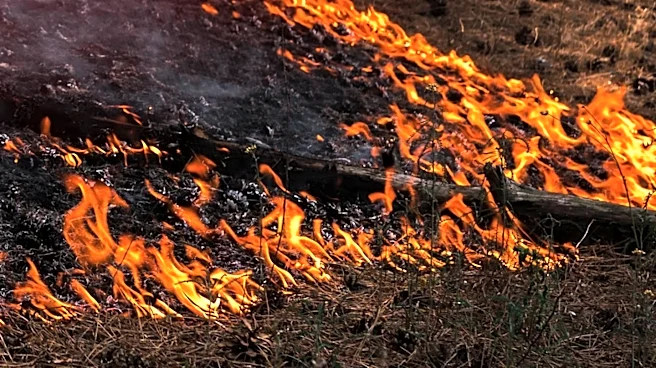
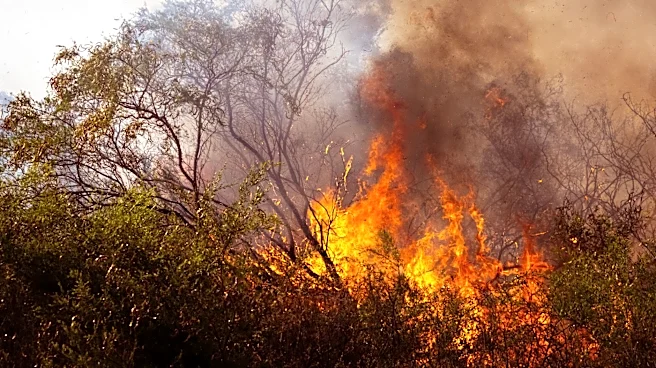
The Ward Fire in Nevada has expanded to approximately 3,770 acres with no containment, prompting an intensified response from firefighting crews. Overnight, firefighters took advantage of cooler temperatures and lower humidity to conduct burnout operations
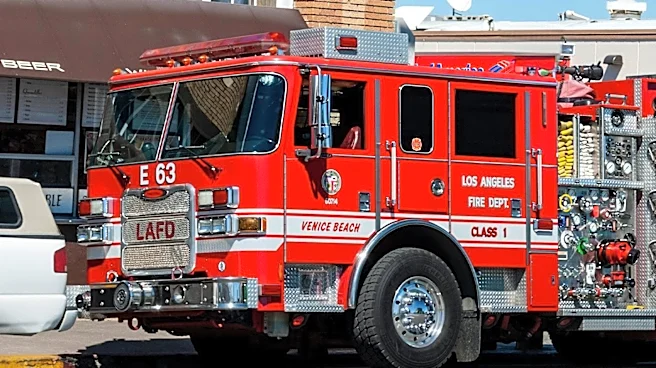
on the east side of the fire, which are reportedly holding. The focus is now on establishing and reinforcing an anchor point on the east side, with crews constructing dozer lines and handlines to strengthen containment efforts. Aviation resources, including helicopters, are assisting with water drops to reduce fire intensity. The fire has drawn 193 personnel, including 17 engines, two hand crews, and 11 helicopters, among other resources. Despite the efforts, resource availability is limited due to multiple major fires burning across the western United States. Public and firefighter safety remains a priority, and the cause of the fire is under investigation.
Why It's Important?
The expansion of the Ward Fire underscores the challenges faced by firefighting efforts in the western United States, where multiple large fires are straining resources. The lack of containment poses a significant threat to nearby communities and ecosystems, highlighting the need for effective fire management strategies. The situation also reflects broader environmental concerns, such as climate change and land management practices, which contribute to the increasing frequency and intensity of wildfires. The fire's impact on air quality, public safety, and local economies further emphasizes the importance of coordinated response efforts and resource allocation.
What's Next?
As firefighting efforts continue, the focus will remain on containment and protecting public safety. Additional resources may be deployed as they become available, and ongoing assessments will guide strategic decisions. The investigation into the fire's cause will be crucial in understanding and preventing future incidents. Public cooperation in staying away from affected areas will be essential to allow crews to concentrate on suppression efforts. The situation will require continuous monitoring and adaptation to changing conditions.