
What's Happening?
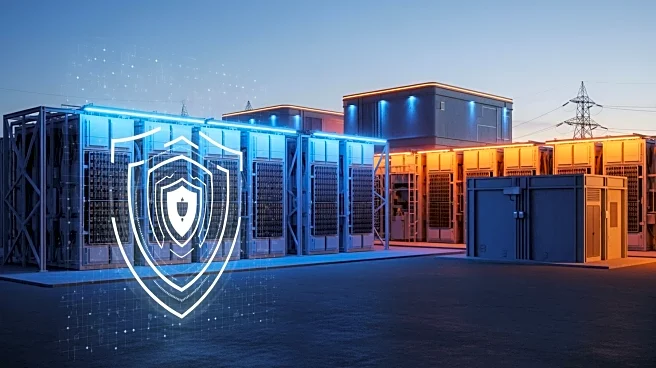
Utility-scale battery energy storage systems (BESS) in the U.S. are increasingly vulnerable to cyberattacks from nation-state and criminal threat groups. A white paper by Brattle Group and Dragos highlights
the urgent need for securing these critical infrastructures to prevent potential disruptions. The demand for BESS is projected to grow significantly, driven by the rising need for data centers and other power requirements. However, this growth is outpacing the ability to manage the sector securely. State-linked actors are targeting these systems as they become integral to the grid, supporting variable demand sources like solar and wind. The report warns that a single outage involving a 100 megawatt system could result in a $1.2 million revenue loss, while larger outages could have regional impacts, affecting thousands of customers and causing significant economic damage.
Why It's Important?
The increasing vulnerability of BESS to cyberattacks poses a significant threat to the U.S. energy infrastructure. As these systems become more critical in supporting renewable energy sources, their disruption could lead to substantial economic losses and energy shortages. The potential for cyberattacks to cause widespread outages highlights the need for enhanced cybersecurity measures. The report underscores the importance of securing these systems to prevent adversaries from exploiting them to distract public attention or cause economic harm. The growing dependence on BESS for grid stability makes them attractive targets for malicious actors, emphasizing the need for robust security protocols to protect national energy security.
What's Next?
To mitigate these risks, stakeholders in the energy sector must prioritize the implementation of advanced cybersecurity measures. This includes monitoring and responding to threats in real-time, patching vulnerabilities, and developing strategies to withstand potential attacks. Collaboration between government agencies, energy companies, and cybersecurity experts will be crucial in fortifying these systems against future threats. As the demand for BESS continues to rise, ensuring their security will be vital to maintaining grid reliability and supporting the transition to renewable energy sources.