
What's Happening?
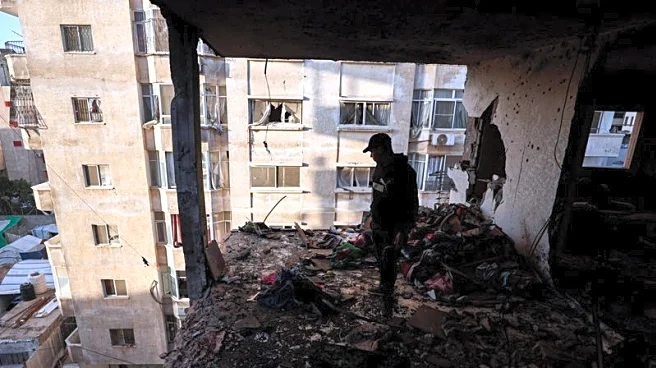
On January 31, 2026, Israeli airstrikes in Gaza led to the deaths of at least 31 Palestinians, marking the deadliest day in over two months, according to the Palestinian Ministry of Health. The strikes targeted
various locations, including shelters, residential apartments, and a police station, resulting in significant civilian casualties, including six children. The Israel Defense Forces (IDF) stated that the strikes were a response to ceasefire violations by Hamas and Islamic Jihad, citing an incident where militants were identified exiting underground infrastructure. Despite a ceasefire agreement in place since mid-October, tensions have persisted, with the IDF accusing Hamas of repeated violations.
Why It's Important?
The escalation in violence highlights the fragile nature of the ceasefire between Israel and Hamas, with significant implications for regional stability. The high civilian death toll, including women and children, underscores the humanitarian impact of the conflict and raises concerns about the protection of non-combatants in conflict zones. The ongoing hostilities could strain international diplomatic efforts aimed at achieving a lasting peace in the region. Additionally, the situation may influence U.S. foreign policy and its role as a mediator in the Israeli-Palestinian conflict, potentially affecting its relations with both Israel and Palestinian authorities.
What's Next?
The continuation of hostilities may prompt international calls for renewed peace talks and increased diplomatic intervention to prevent further escalation. Humanitarian organizations are likely to intensify their efforts to provide aid to affected civilians in Gaza. The U.S. and other countries involved in mediating the ceasefire may face pressure to take a more active role in ensuring compliance with the agreement. The situation could also lead to increased scrutiny of military actions and their compliance with international law, particularly regarding the protection of civilians.
Beyond the Headlines
The recent strikes and their aftermath may have long-term implications for the Israeli-Palestinian conflict, potentially influencing public opinion and political dynamics within both communities. The humanitarian crisis in Gaza could exacerbate existing socio-economic challenges, leading to increased displacement and hardship for civilians. The conflict may also impact regional alliances and the broader geopolitical landscape, as neighboring countries and international actors respond to the developments.