
What's Happening?
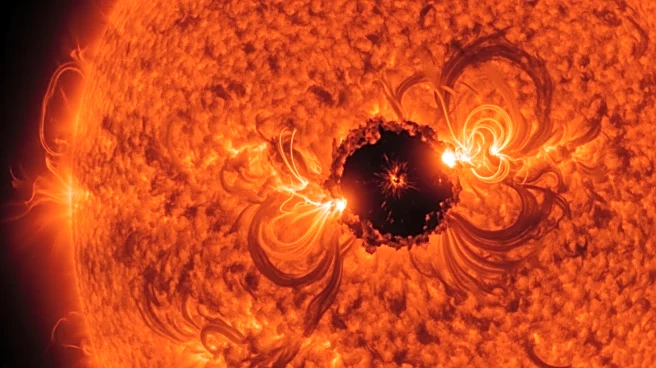
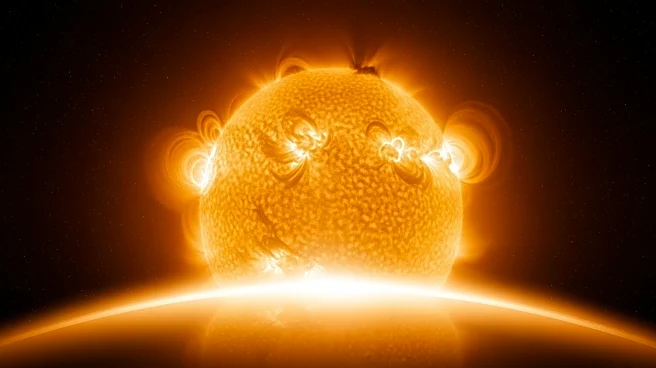
On January 3, 2026, Earth reaches its closest point to the Sun, known as perihelion, at 91,498,806 miles from the star. This event causes the Sun to appear slightly larger in the sky, although the difference
is minimal. The Earth's orbit is elliptical, leading to a 3% variation in distance from the Sun throughout the year. This proximity does not significantly affect Earth's temperature or seasons, which are influenced by the planet's axial tilt. Observers are cautioned against viewing the Sun directly without proper equipment, as it can cause permanent eye damage.
Why It's Important?
The perihelion event is significant for astronomers and space enthusiasts as it provides a unique opportunity to observe the Sun's slightly larger appearance. This phenomenon highlights the elliptical nature of Earth's orbit and serves as a reminder of the intricate dynamics governing our solar system. While the event does not impact global temperatures, it underscores the importance of understanding celestial mechanics and their effects on Earth. The event also emphasizes the need for safe solar observation practices, promoting awareness about eye safety during astronomical events.