

What's Happening?
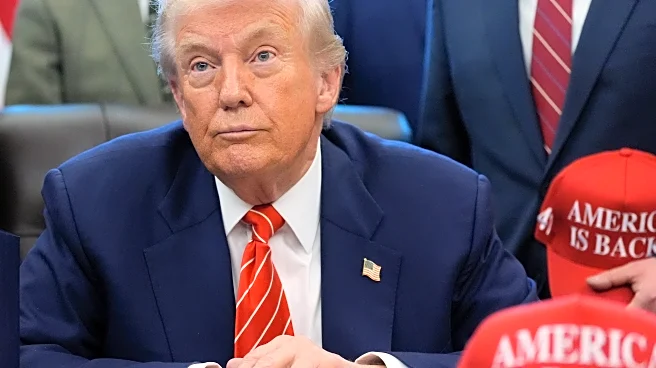
Danish Prime Minister Mette Frederiksen has declared that Denmark is at a 'decisive moment' regarding the future of Greenland following renewed threats from U.S. President Donald Trump to seize the territory. Trump has reiterated his intention to take
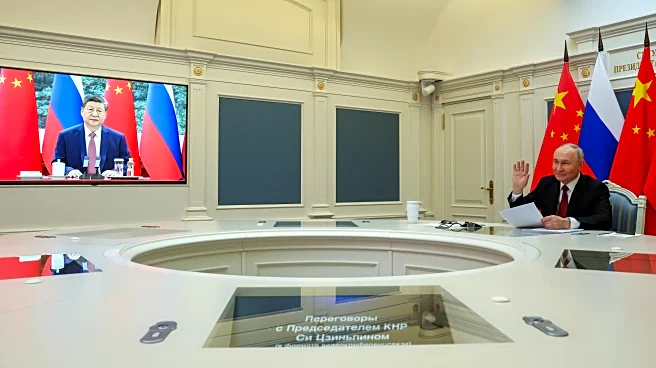
control of Greenland, citing national security concerns due to increased Russian and Chinese activities in the Arctic. This has prompted strong reactions from European allies, including Sweden and Germany, who have expressed support for Denmark. Swedish Prime Minister Ulf Kristersson condemned the U.S.'s 'threatening rhetoric' and emphasized the importance of international law and self-determination. Discussions are ongoing in Washington, D.C., with NATO allies considering a potential operation to enhance security in the Arctic region.
Why It's Important?
The situation underscores the strategic importance of Greenland in global security dynamics, particularly in the context of Arctic geopolitics. President Trump's aggressive stance has raised concerns about potential violations of international law and the implications for NATO unity. The Arctic is becoming an increasingly contested region, with Russia and China expanding their military presence. This has prompted NATO allies to consider bolstering their security measures in the area. The outcome of these discussions could significantly impact U.S. relations with European allies and the future of Arctic security strategies.
What's Next?
NATO allies are expected to continue discussions on how to address the security challenges posed by Russian and Chinese activities in the Arctic. There is potential for a new NATO operation modeled after existing ones like Baltic Sentry, which could involve deploying forces and technology to monitor the region. The international community will be closely watching how the U.S. and its allies navigate this complex geopolitical issue, as any aggressive moves could have far-reaching consequences for global security and diplomatic relations.