




What's Happening?
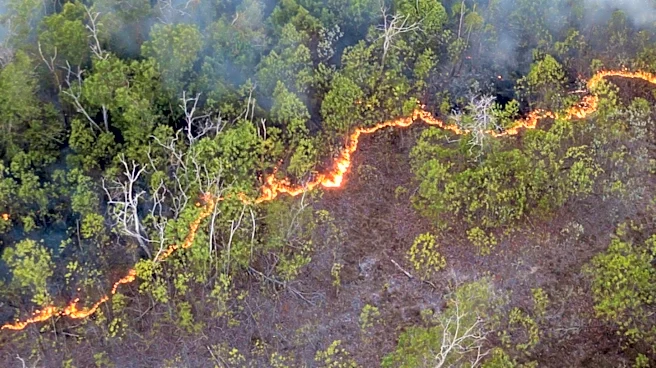
Satellite observations from NASA's Fire Information for Resource Management System (FIRMS), Global Fire Emissions Database (GFED), and NASA Worldview indicate a significant increase in fires and smoke emissions across the central and eastern Amazon since
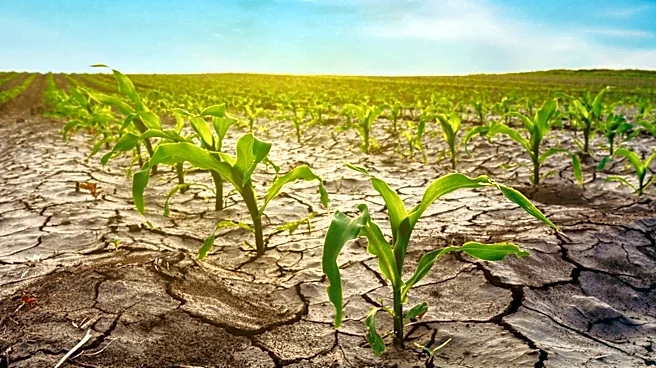
September 2026. This surge extends from the forests around Manaus and Santarém eastward towards the mouth of the Amazon River. Douglas Morton, an Earth system scientist at NASA's Goddard Space Flight Center, describes this as a 'cascade' of tropical wildfires, intensified by the current El Niño climate pattern. The drought conditions, exacerbated by El Niño, have made vast areas of the rainforest highly vulnerable to fire. Manaus, the capital of Brazil's Amazonas state, experienced dangerously polluted air on October 12, 2026, with fine particulate matter exceeding 135 micrograms per cubic meter, leading to school closures and suspension of public events. Scientists anticipate the wildfire cascade to move northward in November and December, affecting Roraima, Amapá, northern Pará, and parts of Venezuela, Guyana, and Suriname, before shifting southward to Brazil and Paraguay by August and September 2027.
Why It's Important?
The escalating Amazon wildfires, driven by El Niño, pose a severe threat to global climate stability and biodiversity. The Amazon rainforest is a critical carbon sink, and its destruction releases vast amounts of stored carbon, accelerating global warming. The fires also have immediate and devastating impacts on local communities, leading to severe air pollution, health crises, and disruptions to daily life, as seen in Manaus. The vulnerability of tropical rainforests to fire is particularly concerning because native plants and animals are not adapted to frequent burning, leading to long-term ecological damage. The recurrence of fires in areas previously affected by El Niño events in 2015 and 2023 suggests a weakening of the forest's resilience, potentially leading to more intense future fires. This situation highlights the urgent need for effective fire prevention and climate mitigation strategies to protect this vital ecosystem.
What's Next?
Scientists predict the wildfire activity will intensify and shift geographically in the coming months. The northern Amazonian regions of Brazil, Venezuela, Guyana, and Suriname are at risk during November and December, followed by the southern Amazon regions of Brazil and Paraguay around August and September 2027. Relief for communities like Manaus is not expected until seasonal rains return in December 2026 or January 2027. Experts, including Douglas Morton, emphasize the critical need for people to avoid burning at all costs, given the intensity of the current El Niño. Efforts to identify and track smaller, hidden fires, which often go undetected by standard satellite monitoring due to smoke and canopy cover, are underway through projects like NASA Earth Action. This improved detection will provide a more complete picture of wildfire activity and aid in targeted intervention efforts.
Beyond the Headlines
The current wildfire crisis in the Amazon underscores the complex interplay between natural climate phenomena like El Niño and human activities. While El Niño creates the dry conditions conducive to fires, the overwhelming majority of fires are human-started, often originating from controlled burns for agricultural land management that escape into the unusually dry forest understory. This highlights a critical ethical and policy challenge: balancing economic activities with environmental protection. The long-term implications extend beyond immediate ecological damage, as repeated fires weaken the forest's ability to recover, potentially pushing parts of the Amazon closer to a 'tipping point' where it transforms into a drier, savanna-like ecosystem. This would have profound and irreversible consequences for global climate regulation, biodiversity, and the livelihoods of indigenous communities.