
What's Happening?
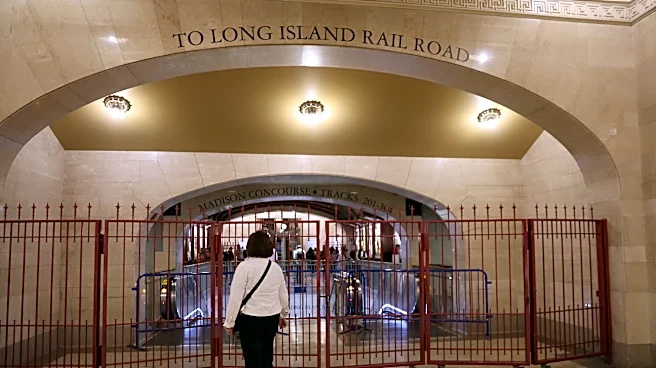
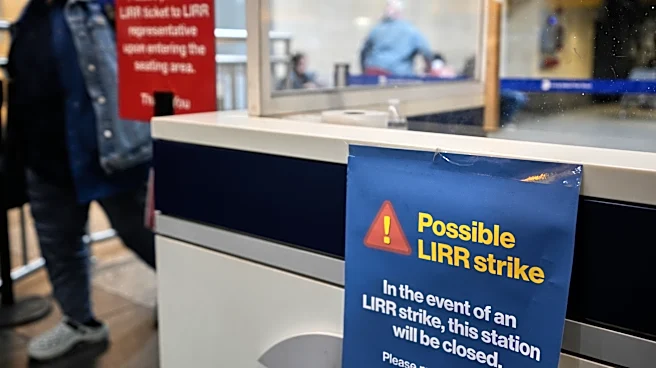
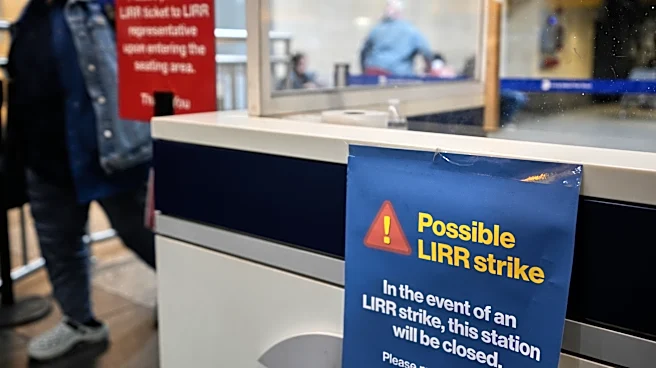
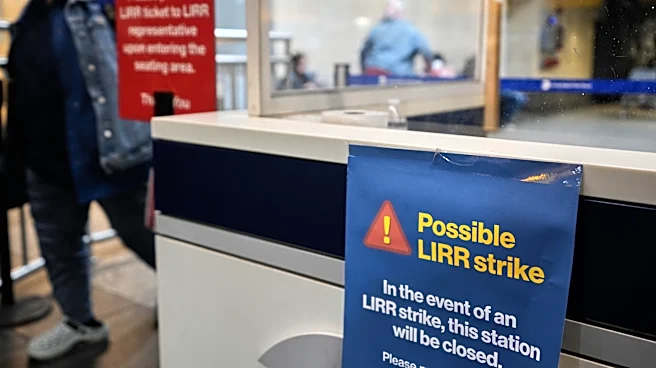
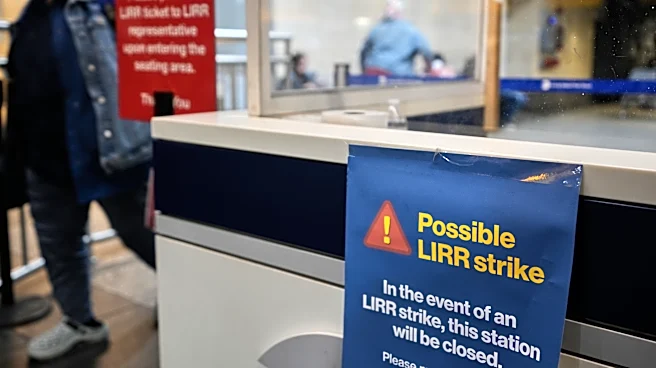
The Long Island Rail Road (LIRR), North America's largest commuter rail system, has been shut down for a second day due to a strike by unionized workers. The strike, the first in three decades, began after
negotiations between the unions and the Metropolitan Transportation Authority (MTA) stalled over salary and healthcare premiums. The shutdown affects approximately 250,000 daily commuters, forcing them to seek alternative transportation. New York Governor Kathy Hochul has urged commuters to work from home, while the MTA has offered limited shuttle bus services. The strike has also impacted sports events in New York City, with disruptions at venues like Madison Square Garden.
Why It's Important?
The LIRR strike underscores the critical role of commuter rail systems in urban transportation and the potential for significant disruption when labor disputes arise. The strike highlights ongoing tensions between labor unions and management over compensation and benefits, issues that are prevalent across various sectors. The impact on commuters and the broader New York City area emphasizes the need for effective negotiation and conflict resolution strategies to prevent prolonged service interruptions. The situation also raises questions about infrastructure resilience and the capacity of alternative transportation options to accommodate displaced commuters.
What's Next?
As the strike continues, pressure mounts on both the unions and the MTA to reach a resolution. Governor Hochul's involvement suggests potential political implications, particularly as she faces criticism from President Trump and other political figures. The outcome of the negotiations could set a precedent for future labor disputes within the transportation sector. Commuters and businesses affected by the strike will be closely monitoring developments, with the potential for increased advocacy for improved labor relations and transportation infrastructure investment.