
What's Happening?
Washington D.C. is set to experience a significant drop in temperatures as an Arctic front moves through the area. According to meteorologists from the Capital Weather Gang, the cold front is expected
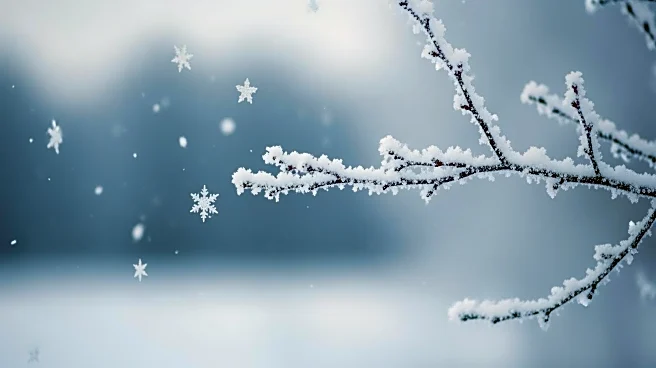
to arrive between 4 and 8 a.m. on New Year's Day, bringing with it a narrow line of snow showers. These snow showers may last only 15 to 20 minutes but could fall heavily in some areas, potentially reducing visibility and causing a quick dusting of snow. The temperatures are predicted to fall from the low 30s into the upper 20s after the snow ends, which could lead to slick spots on untreated surfaces. This weather event follows what has been the coldest December in Washington since 2010, with the average temperature for the month being 37.3 degrees, significantly below the usual average of 41.7 degrees.
Why It's Important?
The arrival of the Arctic front and the associated weather conditions are significant for residents and travelers in the Washington D.C. area. The potential for snow showers and reduced visibility could impact early morning travel plans on New Year's Day, although the holiday may result in lighter traffic. The colder-than-average December and the continuation of cold weather into January highlight ongoing climate patterns that could affect energy consumption and heating costs for residents. Additionally, the weather conditions could influence outdoor New Year's celebrations and events, prompting organizers and attendees to prepare for the cold and potential snow.
What's Next?
As the Arctic front passes, temperatures are expected to remain low, with highs only reaching the low to mid-30s on New Year's Day. Gusty winds from the northwest could exacerbate the cold conditions, with wind gusts reaching up to 35 mph. The weather is expected to remain chilly through the weekend, with temperatures gradually rising to the upper 30s and lower 40s. Residents should stay informed about weather updates and prepare for potential travel disruptions due to the snow showers and cold temperatures.