
What's Happening?
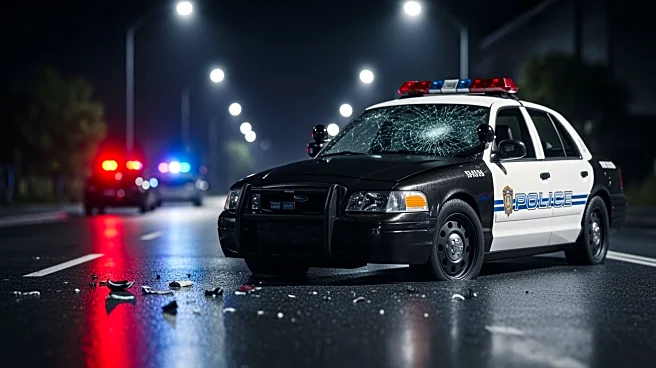
In response to escalating gang violence, Guatemalan authorities have implemented a state of emergency, granting police and military forces enhanced powers to combat criminal activities. This move follows
the killing of 10 police officers by suspected gang members. The state of emergency, declared by President Bernardo Arévalo, allows for the detention of individuals suspected of gang involvement without a judge's order. In the first 48 hours, 293 people were detained, including 23 gang members. The focus is on the Barrio 18 and Mara Salvatrucha gangs, which have long dominated certain areas, such as Zone 18 in Guatemala City, known for its high homicide rates. The government aims to restore order and reduce gang influence in these regions.
Why It's Important?
The state of emergency in Guatemala highlights the severe impact of gang violence on national security and public safety. By granting police and military forces expanded powers, the government seeks to curb the influence of notorious gangs like Barrio 18 and Mara Salvatrucha. This approach mirrors strategies used in neighboring El Salvador, where similar measures have led to mass detentions. However, such actions raise concerns about potential human rights violations and the balance between security and civil liberties. The situation in Guatemala is critical for regional stability, as unchecked gang violence can lead to increased migration and cross-border crime, affecting neighboring countries and international relations.
What's Next?
The Guatemalan government will continue to enforce the state of emergency for 30 days, with the possibility of extension if necessary. Authorities are expected to intensify operations in gang-dominated areas, potentially leading to more arrests and confrontations. The international community, including human rights organizations, will likely monitor the situation closely, assessing the impact on civil liberties and due process. The effectiveness of these measures in reducing gang violence will be crucial for President Arévalo's administration, which faces pressure to demonstrate progress in improving public safety and restoring order.