
What's Happening?
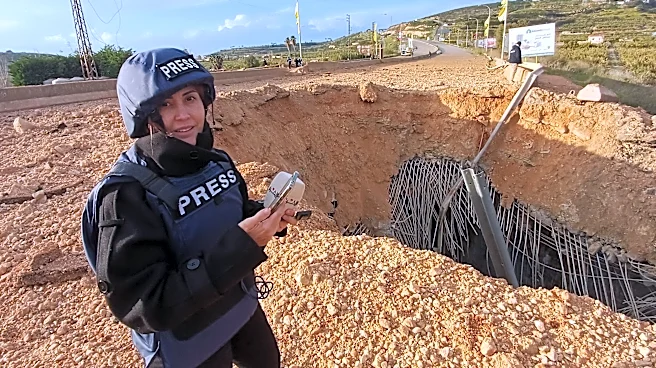
Lebanese journalist Amal Khalil was killed in an Israeli airstrike in southern Lebanon, specifically in the village of al-Tayri. The attack also injured her colleague, Zeinab Faraj. The incident occurred
as Khalil and Faraj were reporting on an earlier Israeli attack. Lebanese officials have condemned the strike, describing it as a 'double-tap' attack, which involves a second strike targeting rescuers. The Committee to Protect Journalists (CPJ) has called for an international investigation into the incident, highlighting the obstruction of medical crews by Israeli forces. Lebanese President Joseph Aoun accused Israel of deliberately targeting journalists to conceal its actions in Lebanon.
Why It's Important?
The killing of Amal Khalil underscores the dangers faced by journalists in conflict zones, particularly in regions with ongoing hostilities like Lebanon. This incident has drawn international attention to the safety of journalists and the need for accountability in military operations. The attack could strain relations between Lebanon and Israel further and may prompt international bodies to scrutinize Israel's military conduct. The targeting of journalists raises concerns about press freedom and the ability to report on conflicts without fear of retribution.
What's Next?
The Lebanese government and international media rights organizations are likely to push for a thorough investigation into the incident. There may be increased calls for international intervention to ensure the protection of journalists in conflict zones. The incident could also lead to heightened tensions in the region, with potential diplomatic repercussions for Israel. Media organizations may reassess their safety protocols for journalists operating in high-risk areas.
Beyond the Headlines
The attack on Khalil highlights the broader issue of press freedom in conflict zones and the risks journalists face when reporting on military actions. It raises ethical questions about the targeting of media personnel and the responsibility of military forces to avoid civilian casualties. The incident may also influence public perception of the conflict, as it draws attention to the human cost of military operations.