






What's Happening?
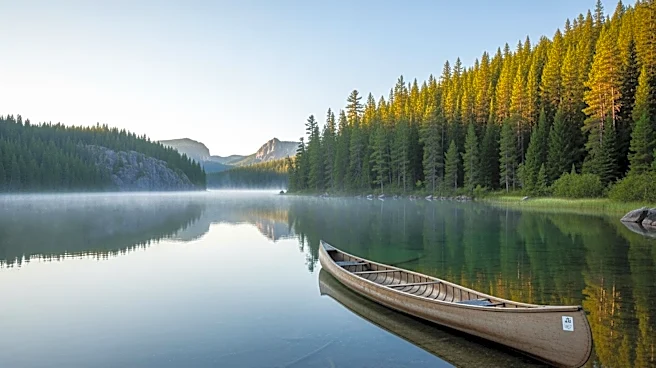
A group of protesters gathered at Lake Como in St. Paul, Minnesota, to express their opposition to the recent decision to lift a mining ban near the Boundary Waters Canoe Area Wilderness. This area is one of Minnesota's last untouched wilderness regions,
and the lifting of the ban has sparked concern among environmentalists and local residents. The protesters, who used singing as a form of demonstration, aim to draw attention to the potential environmental impact of mining activities in this sensitive area. The ban was initially put in place to protect the pristine waters and diverse ecosystems from the adverse effects of mining operations.
Why It's Important?
The decision to lift the mining ban near the Boundary Waters has significant implications for environmental conservation and local communities. The Boundary Waters is a critical natural resource, known for its clean waters and rich biodiversity. Allowing mining operations could lead to pollution and habitat destruction, affecting wildlife and water quality. This issue highlights the ongoing tension between economic development and environmental preservation. Local communities, particularly those dependent on tourism and outdoor recreation, could face economic challenges if the natural beauty of the area is compromised. The protest underscores the public's concern over environmental policies and their long-term impact.
What's Next?
The lifting of the mining ban is likely to face legal challenges and further public protests. Environmental groups may seek to block mining permits through litigation, arguing that the decision violates environmental protection laws. Policymakers and stakeholders will need to address these concerns and find a balance between economic interests and environmental stewardship. The outcome of this issue could set a precedent for future decisions regarding natural resource management in the U.S.