










What's Happening?
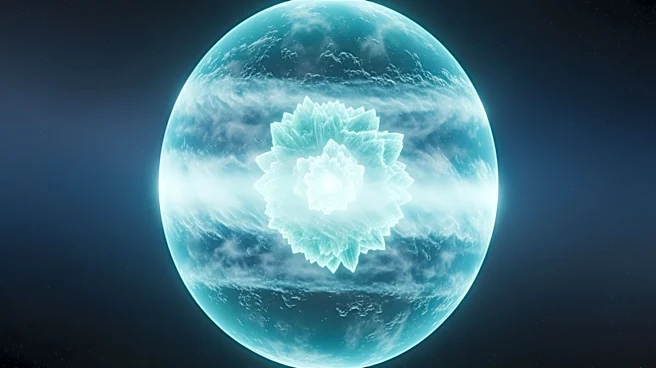
Recent scientific observations have revealed that Uranus has a more ice-rich interior than previously thought, aligning it more closely with Neptune. This discovery was made by detecting carbon monoxide in Uranus's deep atmosphere, which suggests a higher
presence of ice rather than rock. The findings were made using the Atacama Large Millimeter/submillimeter Array telescope in Chile, which observed Uranus multiple times between 2022 and 2024. This new data challenges previous assumptions about the planet's composition and formation.
Why It's Important?
Understanding the composition of Uranus is crucial for astronomers as it provides insights into the formation and evolution of ice giants in our solar system. The discovery that Uranus is more ice-rich than previously believed could influence models of planetary formation and challenge existing theories about the differences between Uranus and Neptune. This knowledge not only enhances our understanding of these distant planets but also contributes to the broader field of planetary science, potentially impacting how scientists search for and study exoplanets with similar characteristics.
What's Next?
The next steps in this research will likely involve further observations and modeling to refine our understanding of Uranus's interior. Scientists may also explore the implications of these findings for other ice giants and consider how this new information fits into the larger context of solar system formation. Continued advancements in telescope technology and observational techniques will be essential for deepening our knowledge of Uranus and similar celestial bodies.