







What's Happening?
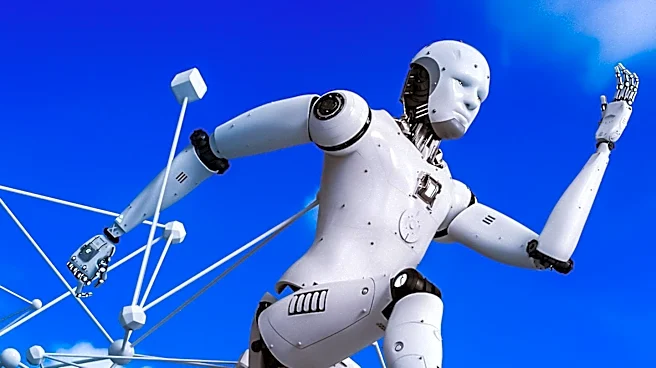
A recent LexisNexis patent analysis reveals that China is leading the world in humanoid robotics innovation, holding six of the top ten spots for the most innovative humanoid robotics startups. Chinese companies such as Fourier, AgiBot, LimX Dynamics,
Pudu Robotics, and Unitree Robotics are at the forefront, with significant patent activity in interaction systems, robot morphology, and control architectures. Despite China's dominance in quantity, the U.S. maintains a lead in patent quality, contributing 11% of global portfolio strength with only 5% of active morphology-related patent families. The report highlights that many strong patent portfolios belong to companies whose primary focus is not humanoid robotics, such as Fanuc, Alphabet, and Nvidia.
Why It's Important?
The findings underscore the intensifying competition between China and the U.S. in advanced technologies, particularly in humanoid robotics. China's rapid innovation and patent accumulation could position it as a future leader in this field, potentially impacting global market dynamics. The U.S., while leading in patent quality, faces challenges in maintaining its competitive edge as China continues to expand its technological capabilities. This development could influence U.S. policy decisions, especially concerning national security and supply chain vulnerabilities, as evidenced by recent legislative actions restricting imports of certain technologies from China.
What's Next?
As geopolitical tensions rise, the U.S. may implement further restrictions on technology imports from China, potentially affecting the global robotics market. Companies in both countries might increase their focus on innovation to secure a competitive advantage. The ongoing technological race could lead to more strategic partnerships and investments in research and development, shaping the future landscape of humanoid robotics.
Beyond the Headlines
The report highlights the strategic importance of patent portfolios in predicting future commercial leadership. Companies with strong patent holdings in humanoid robotics are likely to influence the industry's direction. This situation raises questions about intellectual property rights and the ethical implications of technology transfer between nations, especially in the context of national security concerns.