


What's Happening?
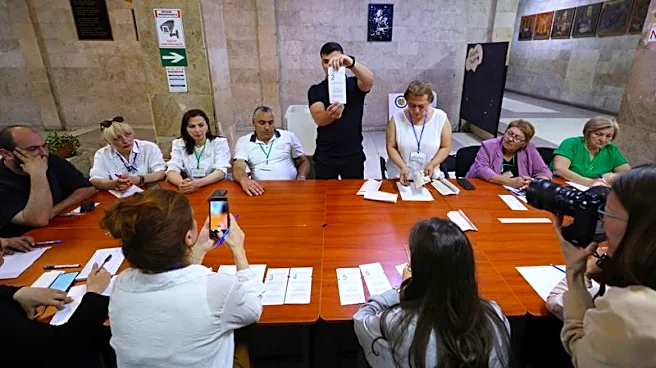
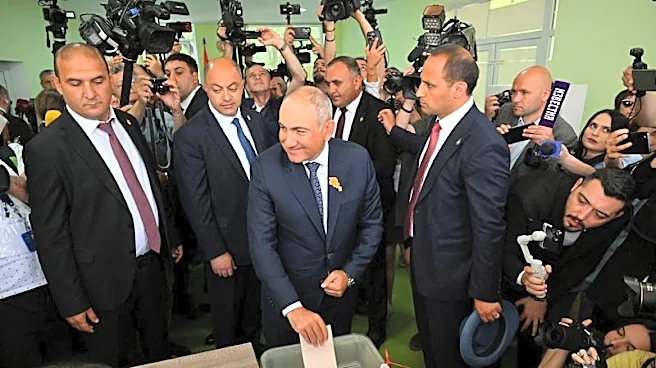
Armenia's ruling pro-Europe party, led by Prime Minister Nikol Pashinyan, has secured a slim majority in the recent parliamentary elections. This victory confirms Armenia's pivot towards Europe and away from its traditional ally, Russia. The election results
show Pashinyan's Civil Contract party winning a majority, while the Strong Armenia alliance, led by Russian-Armenian billionaire Samvel Karapetyan, secured 25% of the seats. Pashinyan's win is seen as a mandate for peace and regional cooperation, with a focus on normalizing relations with Azerbaijan and Turkey. Despite the victory, Pashinyan faces challenges, including the need for a supermajority to amend the constitution and address territorial claims related to Nagorno-Karabakh.
Why It's Important?
The election results signify a significant geopolitical shift in the South Caucasus region, as Armenia moves closer to Europe. This shift is likely to strain Armenia's relations with Russia, which has historically exerted influence over Armenian politics and the economy. The outcome is welcomed by European leaders, who see it as a step towards a more democratic and stable Armenia. However, it also poses challenges, as Armenia remains economically dependent on Russia, particularly for energy. The election underscores the broader regional dynamics, where countries are reassessing their alliances and seeking new partnerships amid changing geopolitical landscapes.
What's Next?
Following the election, Pashinyan is expected to continue pursuing a balanced foreign policy, maintaining ties with both the West and Russia. However, the path forward involves navigating complex regional tensions, particularly with Azerbaijan and Turkey. The Armenian government will need to address domestic economic challenges and manage its relationship with Russia, which has imposed trade restrictions in response to Armenia's pro-European stance. The international community, particularly the European Union, is likely to support Armenia's transition with economic aid and diplomatic backing, as the country seeks to solidify its new geopolitical orientation.