






What's Happening?
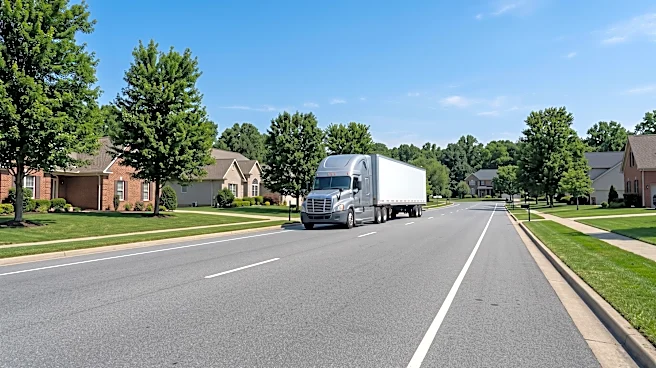
Residents along W. Cornwallis Drive in Greensboro, North Carolina, are raising significant safety concerns regarding excessive speeding and heavy truck traffic. Lee Jackson, a resident, describes the area as the 'Cornwallis 500,' highlighting the dangerous
speeds at which vehicles travel. Jackson and her family have reportedly requested speed studies since 2013 due to their fears for pedestrians and cyclists. While some sections of W. Cornwallis Drive qualified for the Neighborhood Traffic Management Program in 2024, the specific stretch between Cleburne Street and Elmwood Drive, where Jackson resides, did not. David Ortega, Supervising Engineer for Greensboro's Department of Transportation (DOT), explained that this segment is classified as a minor thoroughfare, making it ineligible for the neighborhood program and indicating that truck traffic is expected.
Why It's Important?
The ongoing issues on W. Cornwallis Drive underscore a critical public safety challenge in urban and suburban areas across the U.S., where residential quality of life often clashes with traffic demands. The classification of roads as 'minor thoroughfares' can inadvertently prioritize traffic flow over neighborhood safety, leaving residents feeling vulnerable. This situation highlights the limitations of existing traffic management programs and the need for more flexible or comprehensive solutions that can address specific community concerns, even on higher-classification roads. The potential for serious accidents involving pedestrians and cyclists is a significant concern, impacting the well-being and peace of mind of residents. The lack of immediate solutions also points to the bureaucratic hurdles and resource allocation challenges faced by municipal DOTs in responding to citizen complaints effectively.
What's Next?
In the short term, the Greensboro DOT suggests increased enforcement as a potential solution, advising residents to contact the Greensboro Police Department for additional patrols. The Police Department's response to this suggestion is pending. For a longer-term approach, transportation leaders are developing a regional traffic safety plan that will include minor thoroughfares like W. Cornwallis Drive. A key component of this plan is a speed management strategy designed to identify existing speed issues and propose infrastructure upgrades or countermeasures. Residents like Jackson are hopeful that these future initiatives will lead to tangible improvements before a serious incident occurs. The outcome of these plans and the effectiveness of increased enforcement will be closely watched by the affected community.
Beyond the Headlines
This local issue on W. Cornwallis Drive reflects a broader national debate about urban planning, infrastructure development, and community engagement in traffic safety. The tension between maintaining efficient traffic arteries and ensuring residential safety is a common challenge in growing cities. It raises questions about how road classifications are determined, whether these classifications adequately serve the needs of all stakeholders, and the mechanisms for residents to influence such decisions. The reliance on 'increased enforcement' as a primary short-term solution often points to systemic issues that require more fundamental changes in road design or traffic policy. This situation could serve as a case study for other communities grappling with similar issues, potentially influencing future urban planning strategies to better integrate safety and livability into transportation infrastructure development.