









What's Happening?
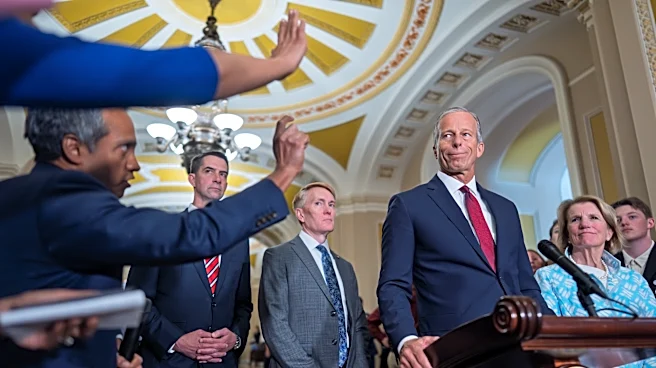
The US Senate has passed a resolution directing President Trump to halt military actions against Iran, marking a significant legislative move against the ongoing conflict. The resolution, which passed with a 50-48 vote, reflects growing bipartisan concern
over the military engagement that began on February 28. This legislative action follows the House of Representatives' approval of the same resolution earlier this month. The vote is notable as it represents the first time both chambers of Congress have passed a resolution directing a president to remove US armed forces from hostilities since the War Powers Act of 1973. Despite the resolution's passage, its practical impact remains uncertain, as the White House has dismissed the War Powers Act as unconstitutional and non-binding. The administration is currently negotiating a peace agreement with Iran, and the resolution could increase pressure on President Trump to avoid resuming hostilities.
Why It's Important?
The Senate's decision to pass the resolution is a significant political development, highlighting a rare instance of bipartisan dissent against President Trump's foreign policy. This move could influence US-Iran relations and impact the administration's ability to conduct military operations without congressional approval. The resolution underscores Congress's constitutional role in authorizing military action, potentially setting a precedent for future conflicts. The vote also reflects public sentiment, as recent polls indicate that a majority of Americans are skeptical about the war's value and its long-term implications. The resolution's passage may embolden congressional leaders to assert more control over military engagements, potentially leading to further legislative actions aimed at curbing executive power in matters of war.
What's Next?
The resolution's passage may lead to legal challenges regarding the War Powers Act's constitutionality, as the White House has indicated it will not comply with the resolution. Legal experts suggest that the issue may ultimately be resolved in the courts. Meanwhile, Congress may continue to push for additional votes on war powers measures, forcing lawmakers to publicly state their positions on the conflict. The outcome of these efforts could influence the upcoming mid-term elections, as control of Congress hangs in the balance. Additionally, any peace agreement with Iran that affects its nuclear program will require congressional review, potentially leading to further legislative scrutiny and debate.
Beyond the Headlines
The resolution's passage raises broader questions about the balance of power between the executive and legislative branches in matters of war. It highlights the ongoing debate over the War Powers Act's relevance and effectiveness in modern conflicts. The situation also underscores the complexities of US foreign policy, particularly in the Middle East, where military engagements often have far-reaching consequences. The resolution may prompt a reevaluation of the US's strategic priorities and its approach to international diplomacy, especially in regions with longstanding geopolitical tensions.